The Jukskei River
and Beyond
Johannesburg - South Africa.
Rehabilitation of the upper Jukskei River through community participation, green technology, and enterprise.
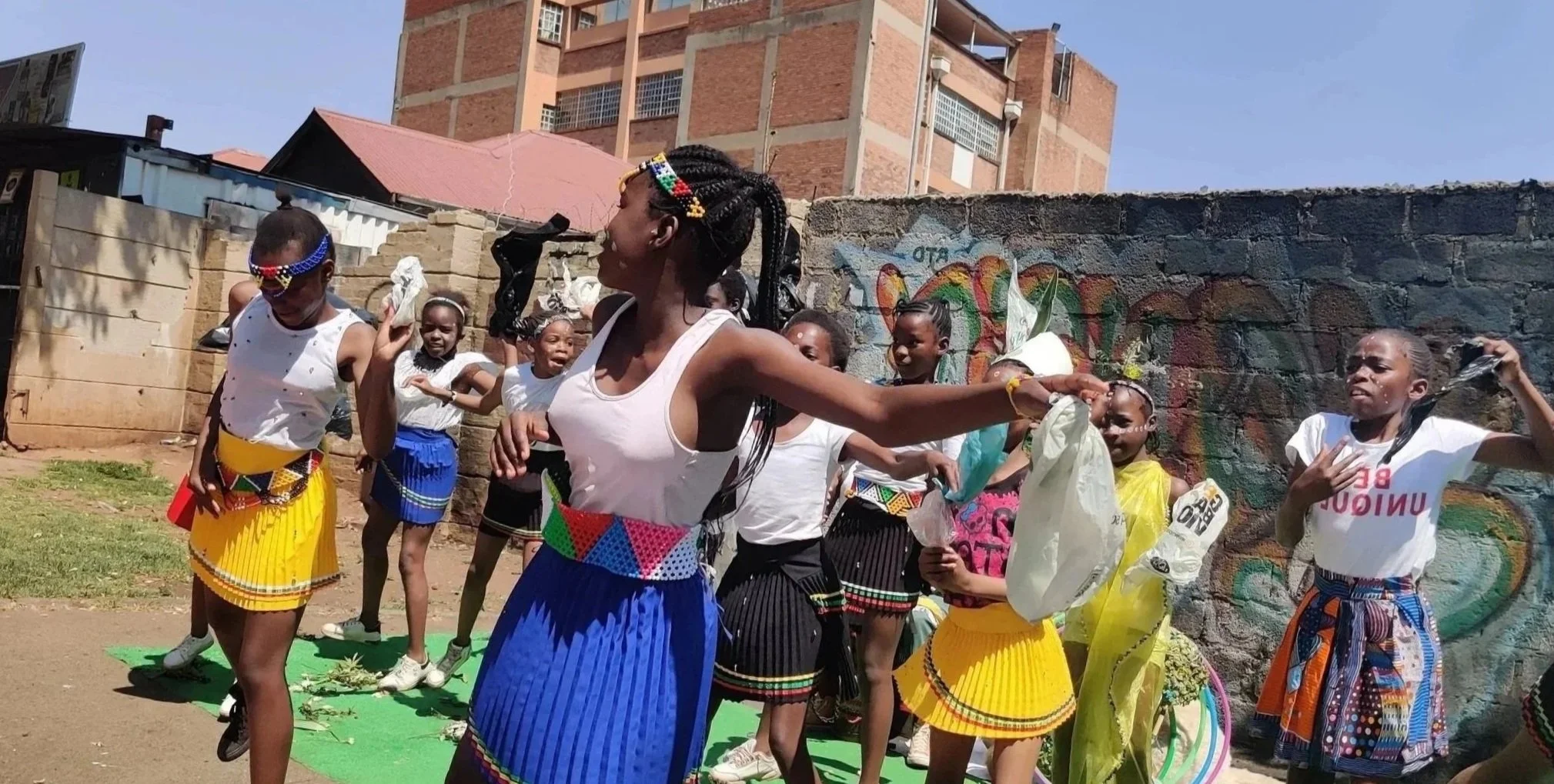
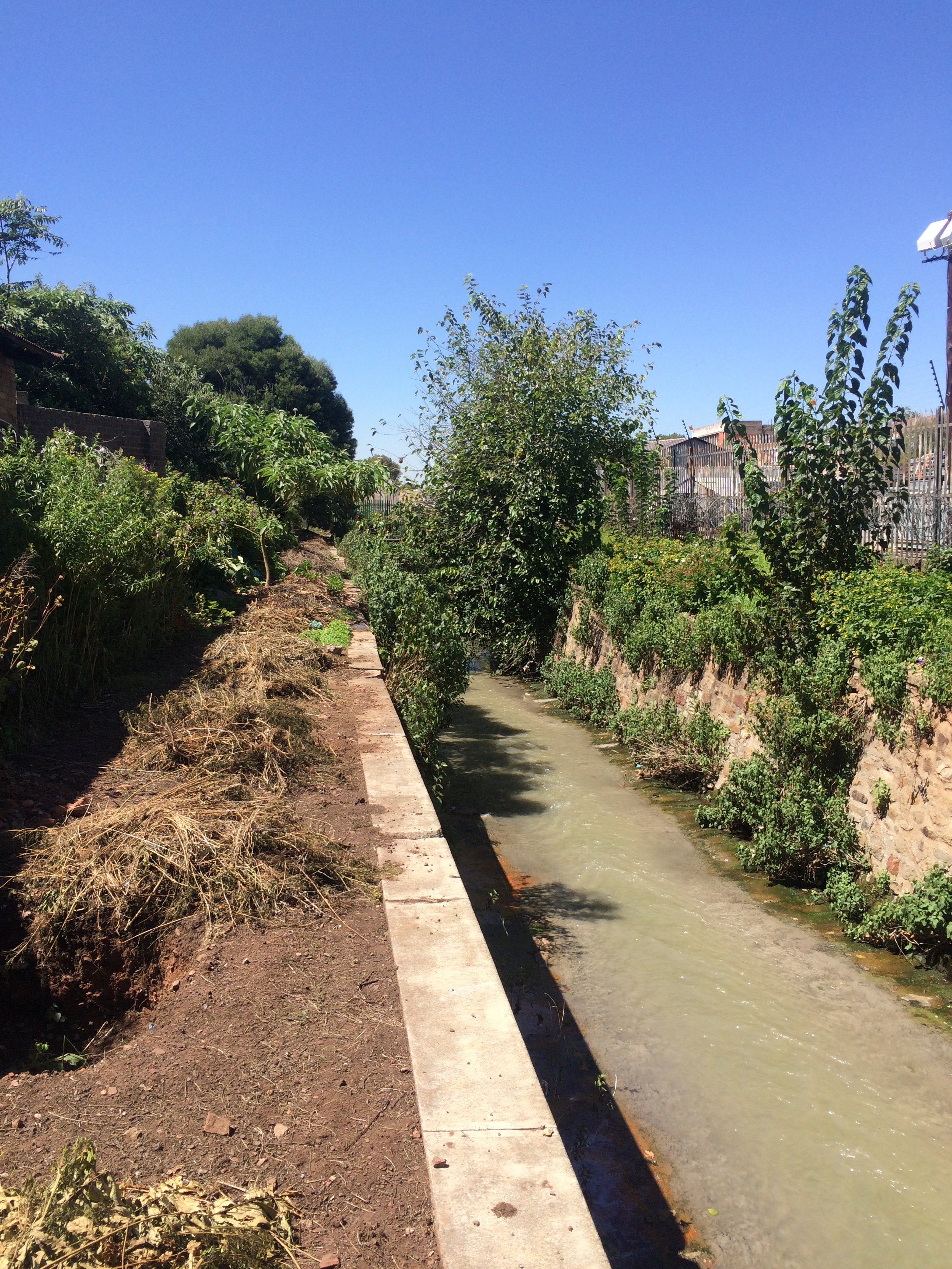
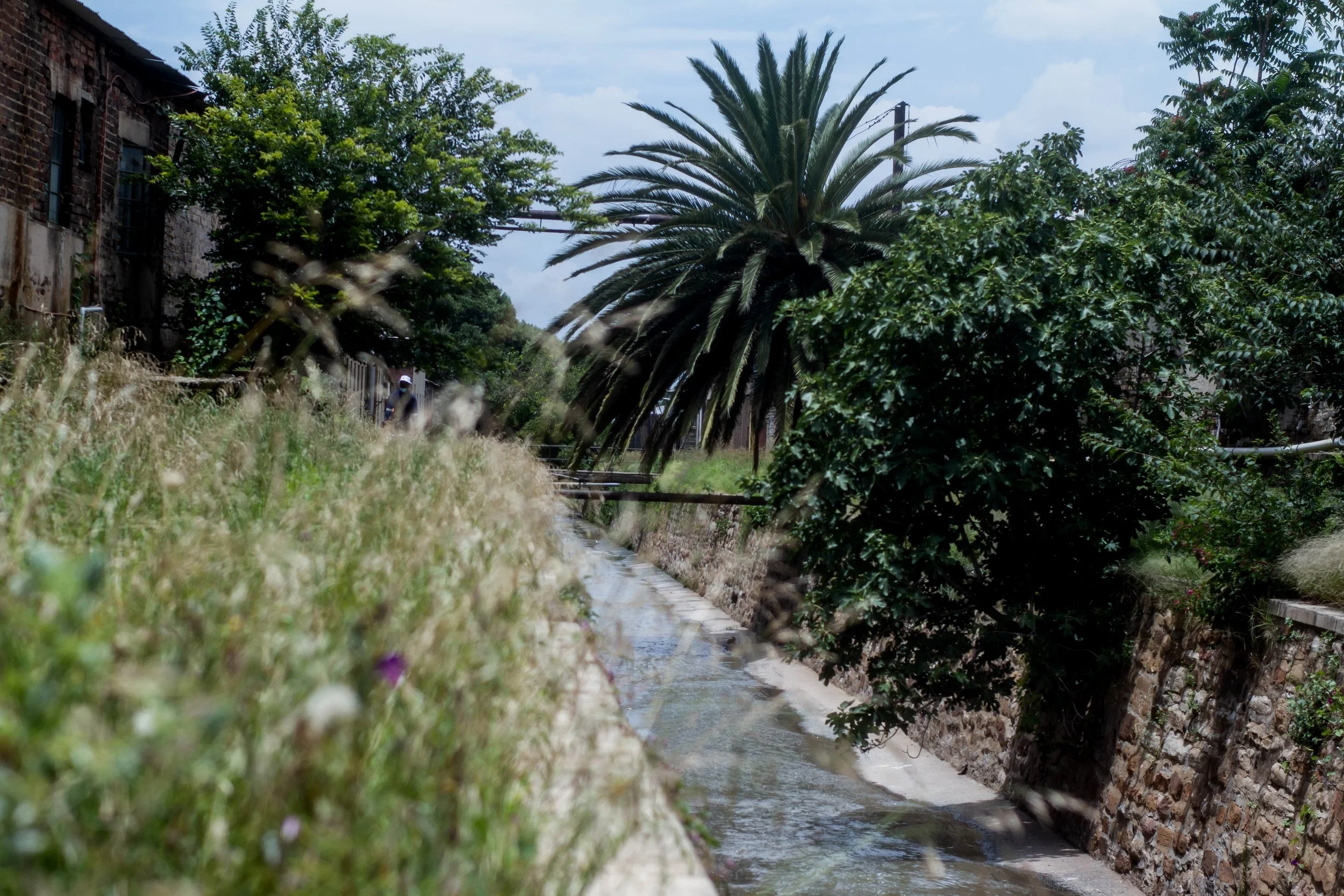
In a neglected corner of Johannesburg, the start of the Jukskei River has long been bricked up. Underground springs are contaminated by untreated sewage, industrial waste, and rubbish — turning what should be a community asset into a health hazard.
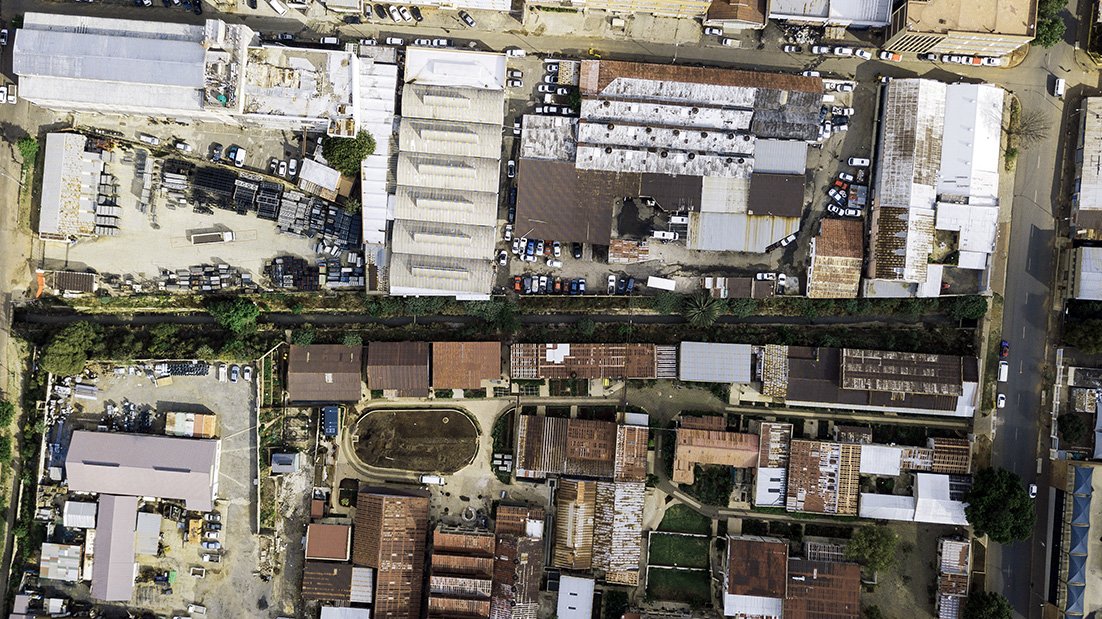
Founded in 2017, WFTF is a citizen-led NGO that bridges City officials, businesses, and residents. Together, we envision a walkable green corridor along the Jukskei — enabling a thriving ecosystem and the well-being of Johannesburg's citizens.
Water for the Future (WFTF) is working to restore this waterway's ecological integrity, creating a river-based economy and vibrant social identity. Our work catalyses green innovation and community-based sustainable design, building opportunity through technical and creative skills development.
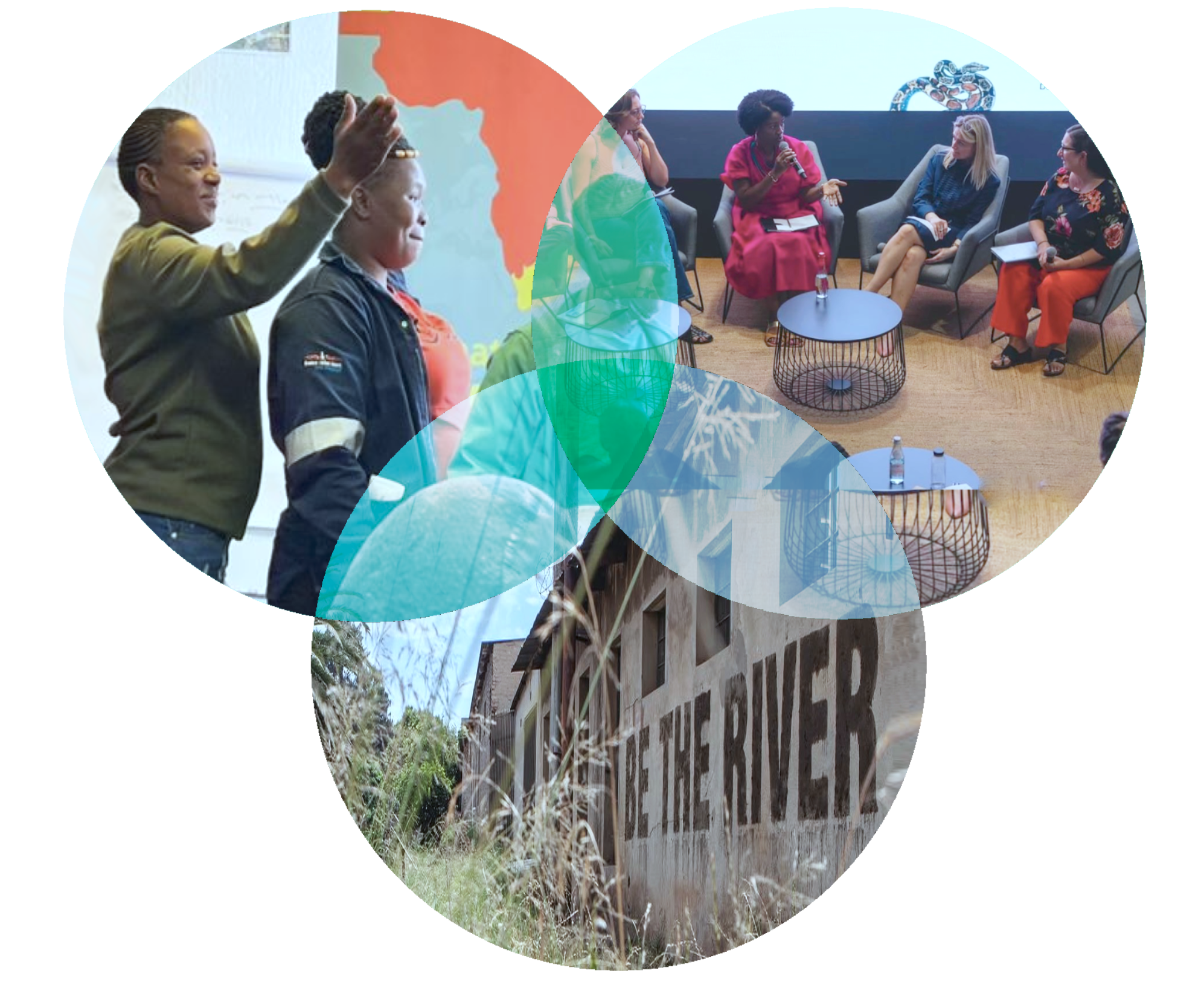
Water for the Future in Action:
Gender Equality and Social Inclusion Workshops
June 2025: Over two unforgettable sessions with facilitators Ndivile and Bertha (Gender CC) led WFTF teams through interactive Gender Equality and Social Inclusion (GESI) workshops, sparking real talk, reflection, and connection. Climate change doesn’t hit everyone equally; women, vulnerable groups and less economically stable communities feel it the hardest. This isn’t abstract theory or distant concern, it’s daily reality for communities living along the Jukskei River, where flooding disproportionately affects informal settlements and where water insecurity forces women to spend hours securing clean water. Through facilitated experiences, participants examine their own lives, relationships, and workplaces through gender and inclusion lenses.
-
From “broken telephone” games that showed how easily communication breaks down, to deep group discussions around what it really means to be a man or woman in today’s South Africa, at home, at work, and in the climate space. The sessions happened in various South African languages such as IsiZulu, Sesotho and English. This multilingual approach matters enormously. Complex concepts about gender, power, and social roles are easiest to explore in mother tongue - where nuance is accessible, where cultural context is embedded in language itself, where people can speak most authentically.
We explored social versus biological roles, challenged stereotypes, and laughed while learning. The distinction between biological sex and socially constructed gender roles is foundational but not always obvious. What aspects of how men and women behave are due to biology, and what aspects are learned, enforced, and changeable social expectations? This question opened space to examine assumptions participants had carried their whole lives. Challenging stereotypes wasn’t abstract exercise - it connected directly to workplace dynamics. If we assume women can’t operate chainsaws or that men shouldn’t express emotion, those assumptions limit what people can do and who they can become. If we believe certain work is “men’s work” or “women’s work,” we exclude qualified people and perpetuate inequality. The SUNCASA teams are diverse, examining stereotypes helped build more inclusive, effective work culture.
The laughter matters too. Gender work can feel heavy, threatening, or uncomfortable especially when it challenges deeply held beliefs or asks people to examine their own behavior and privilege. Facilitation that makes space for humor, play, and joy makes these difficult conversations possible. People let their guards down. They take risks in sharing. They stay engaged rather than shutting down. For many, the link between climate resilience and gender justice clicked in a whole new way. How does this connection work? Climate change impacts are gendered: women are more likely to die in disasters, more responsible for water and food security, less likely to have resources to adapt. Climate solutions can either reinforce or challenge gender inequality. If environmental programs only employ men, only consult male community leaders, only value masculine forms of knowledge - they perpetuate inequality while claiming to address climate crisis. But when environmental work intentionally centers women’s participation and leadership, values care work alongside technical work, ensures benefits reach marginalized groups, it advances both climate resilience and gender justice simultaneously. SUNCASA demonstrates this: women operating chainsaws, women in leadership roles, women’s knowledge informing restoration strategies, women gaining economic security through environmental employment.
Thabo, one of our team leaders, shared how he learned to treat people with respect and lead with discipline, regardless of skill or gender, a powerful takeaway for any leader. This reflection shows the workshops’ impact. Thabo isn’t just intellectually understanding gender equality, he’s translating it into leadership practice. Treating people with respect regardless of gender means not making assumptions about capability, not tolerating harassment or discrimination, creating space for everyone to contribute and grow. For team leaders in SUNCASA, this kind of leadership builds stronger, more effective teams where everyone can thrive. The workshops also created space for men to examine masculinity, not to shame or blame, but to explore how rigid gender expectations harm everyone. Men who feel they must always be strong, never show vulnerability, prove themselves through domination - these men are constrained by masculinity just as women are constrained by expectations of femininity. Gender liberation benefits everyone.
For women in the workshops, the sessions validated experiences they’d had but perhaps couldn’t name. Being interrupted more often, having ideas dismissed then credited to men, being assumed less competent, facing harassment, these aren’t individual experiences but patterns. Understanding them as systemic rather than personal failures or bad luck is both relieving and radicalizing. It shifts blame from individuals to structures and points toward collective rather than individual solutions. The GESI workshops weren’t one-time events but part of ongoing commitment to gender justice within SUNCASA. Workshops create awareness and spark initial changes. SUNCASA’s integration of GESI into environmental work represents best practice. It recognizes that you can’t have climate justice without gender justice, that environmental work either challenges or reinforces existing inequalities, and that the most effective climate solutions center those most impacted by climate crisis - which means centering women, marginalized groups, and communities experiencing economic issues.
From chainsaws to change agents, SUNCASA participants aren’t just learning technical environmental skills. They’re developing as leaders who understand that environmental work is social justice work, that gender equality makes teams stronger and that creating climate resilience requires creating just, inclusive communities where everyone can thrive. The climate crisis requires all of us. GESI ensures that “all of us” truly means all of us - with nobody left behind, everybody’s knowledge valued, and everyone’s leadership cultivated.
Tools, Skills, and Transformation: Brush Cutter and Chainsaw Training
July 2025: Hands-on equipment training with the expert team from Forestry Skills Training marked a significant milestone for WFTF's participants. Across two sessions funded through the WFTF-SUNCASA partnership, participants built real technical capacity for ecosystem restoration work, alongside the confidence and career foundation that comes with it.
Flying debris, rotating blades, and operator strain are real hazards — ones that proper technique, protective equipment, and a safety-conscious mindset can prevent.
-
Precision, Safety, and Technique
Brush cutters may seem simpler than chainsaws, but they require genuine skill and carry real risk if used improperly. Training took place along the Jukskei River at Daylight Point through brush cutter operations led by Mr. Agrippa Malinga, and chainsaw training led by Xolani Mahlalela. Participants got to feel the weight of the machine, hear the engine, experience the vibration, and learn how different blade types respond to different vegetation. Ntutuko Ndlovu captured a key technical insight: "I learned that strong grass needs a tri-blade — now I know when to use which blade!" Mkhize valued the quality of instruction: "The facilitator explained everything clearly — now I can operate the machine confidently."
Mr. Malinga's approach went beyond demonstration. He observed each participant individually, corrected technique, answered questions, and ensured everyone reached competency in a language they understood. This kind of personalized attention builds the deeper confidence that group instruction alone cannot.
Participants left with clear safety principles: always conduct pre-operational checks; PPE is not optional; respect the machine even as experience grows.
Chainsaw Training: From First Nerves to First Cuts
Many participants arrived for chainsaw training feeling nervous. This is appropriate — chainsaws are powerful tools that demand respect. But through patient instruction, peer encouragement, and structured hands-on practice, participants crossed an important threshold. Snenhlanhla Mchunu described the shift: "At first, I was scared of the chainsaw. But after asking questions and getting help, it became easy."
The training covered chainsaw components and functions, how to strip, clean, and maintain the machine, and the safe operation techniques that professional operators rely on. Trust Ndlovu reflected on his growth: "I used to only cut small trees. Now I can cut any size — and I understand why safety always comes first." For first-time operators, the training represented a crossing from needing others to do the work, to being capable of doing it themselves. For those with prior experience, it formalized and deepened what they knew, adding credentials alongside competency.
Sibusiso Khumalo highlighted the importance of mother-tongue facilitation: "The facilitator gave us time and explained in our mother tongue. That made it easier for all of us." Andile Poswa looked ahead: "This training has opened new doors for me. I can even start my own business one day." Zikhona Mphafu spoke to something broader — the significance of women gaining access to skills that have traditionally excluded them: "As a woman, I want to share my experience with other young people like me — to not be afraid to learn chainsaw skills. Even if it's risky, it brings opportunity and can empower young women."
Learning Together, Growing Together
A special guest joined the brush cutter session: Princess Sibeko, an Occupational Health and Safety student from Greenview Private College, completing her practical placement with WFTF. Her presence enriched both sides. For SUNCASA participants, it affirmed that their work is professional and worth studying. For Princess, it expanded her understanding of what safety work truly involves: "I didn't know the safety field was this broad. This experience has truly changed how I see things."
Both training sessions reflected something larger than equipment operation. When team members support each other's technique, remind each other about PPE, and celebrate each other's breakthroughs, they build a culture of care and continuous improvement. Good training doesn't just transfer skills — it opens doors, builds careers, and creates people who are ready for what comes next.
From the Jukskei to the World: WFTF at the G20 and Beyond
Sep-Nov 2025: In the second half of 2025, Water for the Future stepped onto an international stage — not as observers, but as contributors. From hosting 120 global delegates along the Upper Jukskei River Corridor in September, to presenting at two major policy forums in November, WFTF demonstrated that community-led environmental work belongs at the heart of global conversations about urban resilience, innovation policy, and climate action.
-
The Urban20 Technical Tour: Johannesburg as a City with Solutions
On 12 September 2025, WFTF co-hosted the Urban20 Technical Tour, welcoming 120 delegates from cities across the globe to walk the streets of the Jukskei River Corridor and witness restoration work in action. Urban20 brings together representatives from the world's major cities to coordinate ambitious urban climate solutions. That they chose the Upper Jukskei as a site worth visiting was itself a statement: this is work the world can learn from.
The tour was not a conventional site visit. It was an immersion into community-led environmental action — a living demonstration that nature-based solutions are not theoretical frameworks but real interventions happening in real neighbourhoods, built and maintained by the people who live there. Delegates walked past erosion control structures built from site materials, riverbanks being transformed through the reintroduction of indigenous grassland biomes, and community monitoring systems tracking water quality in real time. They witnessed youth-led cleanup initiatives and met the WFTF and SUNCASA team members who do this work daily.
What moved delegates was not only the technical sophistication of the interventions — though those mattered — but the palpable sense of community ownership and pride. They heard directly from community members about what the river means to them, the changes they have witnessed, and their hopes for what restoration can still achieve. These conversations sparked genuine enthusiasm and rich dialogue about scalability, financing mechanisms, community engagement strategies, and monitoring and evaluation.
The City of Johannesburg played an active role in planning the event, ensuring everything ran seamlessly and demonstrating that municipal government and community-led initiatives can work together powerfully when there is genuine shared commitment. For the core WFTF team — Khethiwe Mzangwe, Sanele Ngcobo, Muskaan Malik, and Gift Mohlasedi — the tour was both a test and a triumph. Hosting 120 international delegates requires coordination, clarity, and the ability to translate years of complex restoration work into accessible, compelling narrative. They rose to it brilliantly.
The tour affirmed something WFTF has long believed: Johannesburg has solutions to share. The Jukskei has stories to tell. And community-led, nature-based solutions are not supplementary ideas — they are essential strategies for urban climate resilience.
Globelics and Science Forum South Africa: Community Knowledge in Policy Spaces
Building on the momentum of the G20, WFTF participated in two major national and international policy forums in November 2025: the Globelics International Conference and Science Forum South Africa, both held in Pretoria. These invitations represent meaningful recognition. Academic conferences and national science forums have traditionally centred researchers, policymakers, and institutional voices. Community organisations doing hands-on environmental work are often absent. When WFTF is invited to contribute, it signals growing acknowledgment that community-led practice generates knowledge worth bringing into policy conversation.
On 24 November, at the CSIR International Convention Centre, WFTF joined the Globelics 2025 session on Engaged Policy Experimentation (EPE), grounded in work from the TIP-SA Community of Practice. Romy Stander, Director and Co-Founder of WFTF, sat alongside a panel of exceptional contributors spanning the University of Johannesburg, the Gauteng Department of Environment, and the Department of Trade, Industry and Competition. Together, the panel explored how policy moves from conception through institutional layers to ground-level practice — and crucially, how feedback from implementation should continuously refine policy design.
Engaged Policy Experimentation treats policy not as something handed down from above, but as a hypothesis to be tested and adapted through ongoing engagement with those it affects. This resonates deeply with how effective community organisations already work: trying approaches, learning from results, adjusting based on what actually happens on the ground. The session's insights fed into research funded by The British Academy and led by the University of Johannesburg and University College London, contributing to broader understanding of how innovation policy can better support environmental sustainability and social justice.
Two days later, on 26 November at the NRF, WFTF participated in the launch of a significant new initiative: the Canada-Africa Partnership (CAP) on Intellectual Property for Climate Action — a seven-year commitment bringing together leading scholars from the University of Ottawa and the University of Cape Town alongside South Africa's Department of Science and Innovation, facilitated by Professor Jeremy de Beer, Tier 1 Canada Research Chair in Innovation and IP Law.
The connection between intellectual property and climate action is more urgent than it might first appear. Climate solutions — green technologies, nature-based interventions, innovative adaptation strategies — are frequently controlled through IP mechanisms that restrict access. The world urgently needs these solutions to spread, yet the frameworks governing them can place them out of reach of the communities that need them most. Indigenous knowledge adds further complexity: many effective climate adaptation strategies draw on traditional knowledge developed communally over generations, knowledge that sits uneasily within IP frameworks designed around individual inventors and commercial application. How this knowledge is protected, shared, and credited matters enormously for both justice and efficacy.
Building Bridges Between Ground and Policy
Across all three platforms, WFTF occupied a distinctive position: community-based practitioners bringing lived experience into spaces more accustomed to institutional and academic voices. The value of this flows in both directions. WFTF brings practical insight that enriches policy discussion. These forums, in turn, expose WFTF to cutting-edge research, new frameworks, and networks that strengthen community-level work.
The G20 period created momentum. Globelics and Science Forum South Africa channelled that momentum into concrete partnerships and knowledge exchange. The seven-year Canada-Africa Partnership provides structure for sustained engagement. And the work along the Jukskei continues — now connected to national and international networks committed to the same goals of environmental justice, climate resilience, and community-led transformation.
From Hotspot to Haven: Transforming Daylight Point
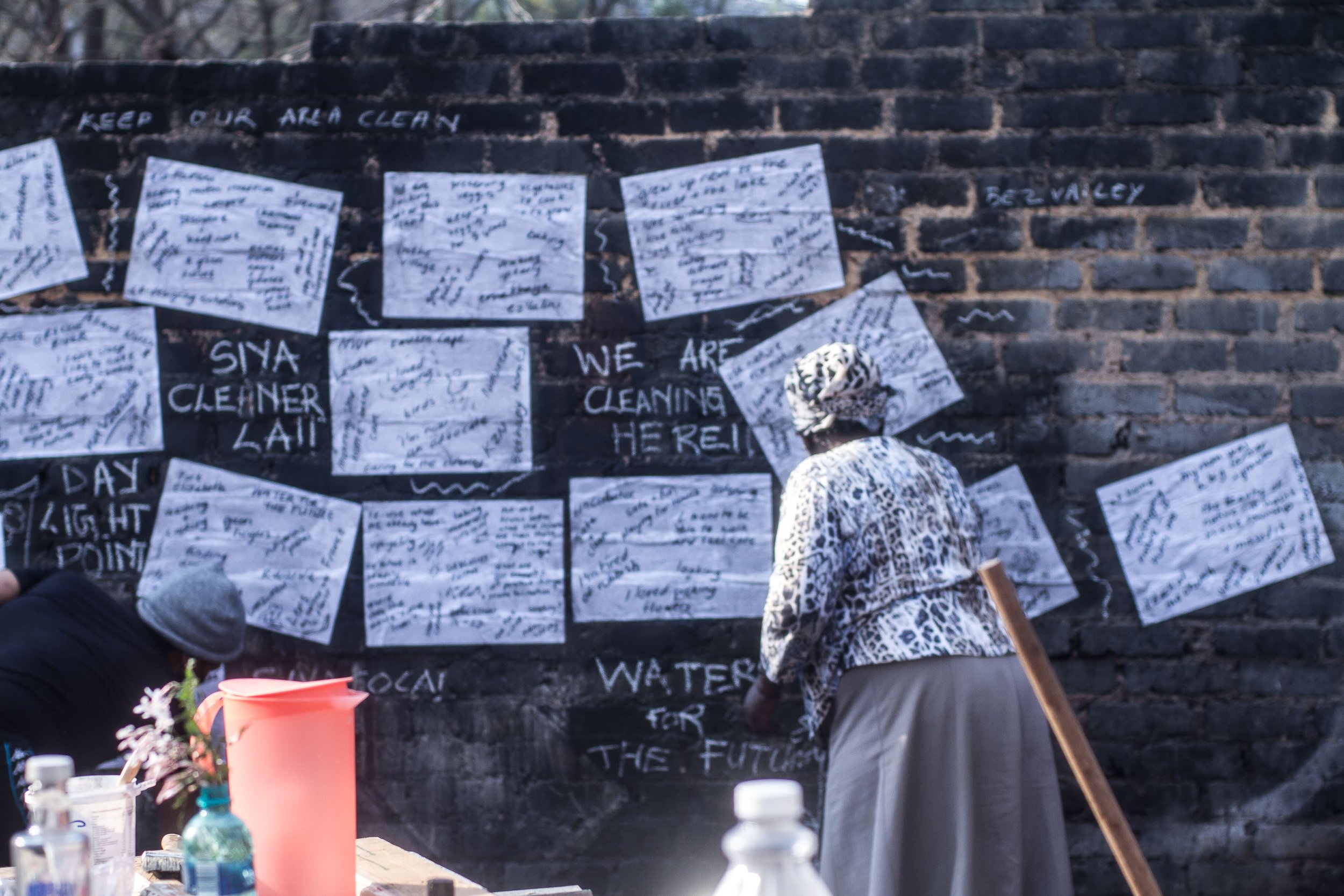
At Daylight Point, where the Jukskei River first greets the sun, our community is rewriting the story. The name itself carries poetry - Daylight Point, the place where the river emerges into light but for years, the reality was far from poetic. This site has been notorious as the “dumping hotspot.” Teams would clean it up in the morning, and by sundown, the rubbish would be back. Skips filled up in hours. It was frustrating, demoralizing work, a cycle that seemed impossible to break.
Breaking that cycle requires more than periodic cleanups. It requires changing the underlying conditions and shifting community perceptions and behaviors.
-
Understanding why Daylight Point became such an inflexible dumping site requires understanding the complex dynamics of waste, infrastructure, and behavior in under-resourced urban contexts. When municipal waste collection is inadequate or inaccessible, when people lack other options for disposal, when enforcement is absent, dumping happens. And once a site becomes known as a dumping ground, it attracts more dumping, both because people see others dumping there and because the existing waste creates perception that “this is where trash goes.”
Over time, a quiet shift began. Fathima Haniff, from our WFTF Office, started looking for new ways to keep it clean beyond the usual skip allocations made possible through the SUNCASA project and procurement support through Johannesburg Inner City Partnership. It would have been easy to accept Daylight Point as problem site, to keep doing periodic cleanups, keep filling skips, keep watching the waste return. Instead, we asked: what would it take to actually change this pattern? That question opened space for innovation and relationship-building that wouldn’t have happened otherwise.
That’s when Fathima connected with David and Lizzy from PikItUp - together they began a regular rhythm of care, monitoring, collecting and coordinating with PikItUp to make sure nothing was left behind. This partnership transformed the approach from reactive cleanup to proactive waste management. The relationship with PikItUp drivers matters enormously. Municipal waste management systems often operate on fixed routes and schedules that don’t accommodate sites with unusual needs. By building personal relationships with David and Lizzy, Fathima created flexibility within the system, drivers who would check on Daylight Point even when it wasn’t on their official route, who would coordinate with her about when pickup was needed, who took personal interest in keeping the site clean.
Then Bongumusa Zwane, one of the team leaders and the rest of the SUNCASA team joined in, and things started to flow differently. Big shoutout to the PikItUp drivers who make time in their busy routes to visit and assist, and to community member David Alloisis, who continues to monitor and look after this site with so much dedication. This expansion of the care network was crucial. The WFTF Office couldn’t monitor Daylight Point continuously. But with Bongumusa and the SUNCASA team regularly present, with David Alloisis providing consistent community oversight, with PikItUp drivers coordinating their visits, suddenly there’s a network of care rather than individual effort.
What has been a historical eyesore, health hazard, and all sorts of frustrations rolled into one is slowly transforming into a place of shared responsibility and pride. The transformation isn’t complete or guaranteed. Bad days still happen and dumping still occurs. But the overall trajectory has shifted from deterioration to improvement. Alongside our already existing indigenous pocket forest at Daylight Point, the Effective Microorganism (EM) sprays we use now help nourish the soil - preparing it for future community gardens that will take root where waste once gathered. It’s a small but meaningful symbol of how collective action can restore both land and spirit. Daylight Point’s transformation demonstrates that even sites that seem hopelessly degraded can change when communities commit to that change, when individuals like Fathima and Bongumusa and David bring persistence and creativity to the challenge, when institutions like PikItUp flex to support community-led efforts.
The “land and spirit” pairing is important. Environmental degradation affects people’s sense of pride, safety, and possibility. Living surrounded by waste is demoralizing. It signals that your neighborhood doesn’t matter, that no one cares, that things will only get worse. Transformation of degraded spaces does more than improve material conditions - it restores community spirit, demonstrates that positive change is possible, and creates momentum for other improvements. The story of Daylight Point will continue to unfold. But the shift has happened. Daylight Point is no longer just the dumping hotspot, the impossible challenge, the symbol of neighborhood degradation. It’s becoming something else, a site of transformation, a demonstration of what community-led environmental action can achieve, a place where the Jukskei River first greets the sun and communities greet possibility. The sun rises at Daylight Point. And slowly, steadily, we are building a landscape worthy of that light.
Gender Equality and Social Inclusion Workshops
June 2025: Over two unforgettable sessions with facilitators Ndivile and Bertha (Gender CC) led WFTF teams through interactive Gender Equality and Social Inclusion (GESI) workshops, sparking real talk, reflection, and connection. Climate change doesn’t hit everyone equally; women, vulnerable groups and less economically stable communities feel it the hardest. This isn’t abstract theory or distant concern, it’s daily reality for communities living along the Jukskei River, where flooding disproportionately affects informal settlements and where water insecurity forces women to spend hours securing clean water. Through facilitated experiences, participants examine their own lives, relationships, and workplaces through gender and inclusion lenses.
-
From “broken telephone” games that showed how easily communication breaks down, to deep group discussions around what it really means to be a man or woman in today’s South Africa, at home, at work, and in the climate space. The sessions happened in various South African languages such as IsiZulu, Sesotho and English. This multilingual approach matters enormously. Complex concepts about gender, power, and social roles are easiest to explore in mother tongue - where nuance is accessible, where cultural context is embedded in language itself, where people can speak most authentically.
We explored social versus biological roles, challenged stereotypes, and laughed while learning. The distinction between biological sex and socially constructed gender roles is foundational but not always obvious. What aspects of how men and women behave are due to biology, and what aspects are learned, enforced, and changeable social expectations? This question opened space to examine assumptions participants had carried their whole lives. Challenging stereotypes wasn’t abstract exercise - it connected directly to workplace dynamics. If we assume women can’t operate chainsaws or that men shouldn’t express emotion, those assumptions limit what people can do and who they can become. If we believe certain work is “men’s work” or “women’s work,” we exclude qualified people and perpetuate inequality. The SUNCASA teams are diverse, examining stereotypes helped build more inclusive, effective work culture.
The laughter matters too. Gender work can feel heavy, threatening, or uncomfortable especially when it challenges deeply held beliefs or asks people to examine their own behavior and privilege. Facilitation that makes space for humor, play, and joy makes these difficult conversations possible. People let their guards down. They take risks in sharing. They stay engaged rather than shutting down. For many, the link between climate resilience and gender justice clicked in a whole new way. How does this connection work? Climate change impacts are gendered: women are more likely to die in disasters, more responsible for water and food security, less likely to have resources to adapt. Climate solutions can either reinforce or challenge gender inequality. If environmental programs only employ men, only consult male community leaders, only value masculine forms of knowledge - they perpetuate inequality while claiming to address climate crisis. But when environmental work intentionally centers women’s participation and leadership, values care work alongside technical work, ensures benefits reach marginalized groups, it advances both climate resilience and gender justice simultaneously. SUNCASA demonstrates this: women operating chainsaws, women in leadership roles, women’s knowledge informing restoration strategies, women gaining economic security through environmental employment.
Thabo, one of our team leaders, shared how he learned to treat people with respect and lead with discipline, regardless of skill or gender, a powerful takeaway for any leader. This reflection shows the workshops’ impact. Thabo isn’t just intellectually understanding gender equality, he’s translating it into leadership practice. Treating people with respect regardless of gender means not making assumptions about capability, not tolerating harassment or discrimination, creating space for everyone to contribute and grow. For team leaders in SUNCASA, this kind of leadership builds stronger, more effective teams where everyone can thrive. The workshops also created space for men to examine masculinity, not to shame or blame, but to explore how rigid gender expectations harm everyone. Men who feel they must always be strong, never show vulnerability, prove themselves through domination - these men are constrained by masculinity just as women are constrained by expectations of femininity. Gender liberation benefits everyone.
For women in the workshops, the sessions validated experiences they’d had but perhaps couldn’t name. Being interrupted more often, having ideas dismissed then credited to men, being assumed less competent, facing harassment, these aren’t individual experiences but patterns. Understanding them as systemic rather than personal failures or bad luck is both relieving and radicalizing. It shifts blame from individuals to structures and points toward collective rather than individual solutions. The GESI workshops weren’t one-time events but part of ongoing commitment to gender justice within SUNCASA. Workshops create awareness and spark initial changes. SUNCASA’s integration of GESI into environmental work represents best practice. It recognizes that you can’t have climate justice without gender justice, that environmental work either challenges or reinforces existing inequalities, and that the most effective climate solutions center those most impacted by climate crisis - which means centering women, marginalized groups, and communities experiencing economic issues.
From chainsaws to change agents, SUNCASA participants aren’t just learning technical environmental skills. They’re developing as leaders who understand that environmental work is social justice work, that gender equality makes teams stronger and that creating climate resilience requires creating just, inclusive communities where everyone can thrive. The climate crisis requires all of us. GESI ensures that “all of us” truly means all of us - with nobody left behind, everybody’s knowledge valued, and everyone’s leadership cultivated.
Ecology
As the city grew, the original springs and wetlands of the upper Jukskei were decimated. With science, partnerships and hard labour, we are slowly bringing the river function back.
Economy
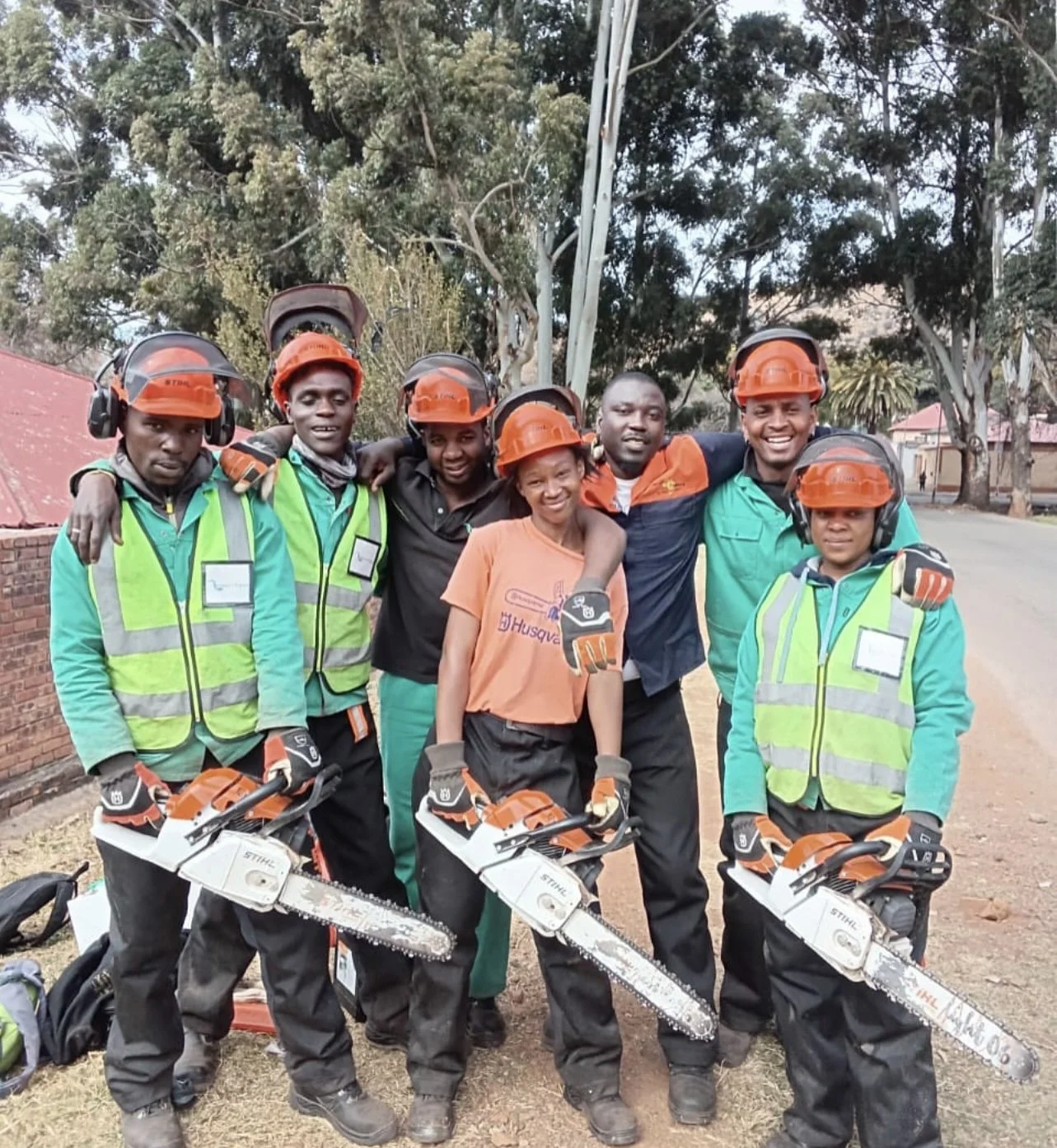
Every step of rehabilitating the river presents opportunities for enterprise development, skills training and jobs. Water for the Future collaborates to produce economic-focused outcomes.
Information portal
-
Read key reports on the local and global state of climate change and water conservation.
-
Source list of special reports on the site, and an expanding bibliography.
-
Our organisation has been covered widely online and in the press.
-
Read news associated with social, environmental and economic issues that motivate and inspire our work.