
Water For The Future was founded in 2017 with a single, stubborn idea: that the Jukskei River could be rehabilitated by the people who live alongside it, using nature itself as the toolkit. Nearly a decade on, that idea has grown into a five-kilometre inner-city corridor of restored grassland, monitored water quality, and paid community employment. This is the story of what that restoration has built — including the recent chapter funded through the SUNCASA partnership (Scaling Urban Nature-based Solutions for Climate Adaptation in Sub-Saharan Africa), which concluded its funding period in 2026.
Scaling up with SUNCASA and Beyond
WFTF's Restoration Story, 2017–2026
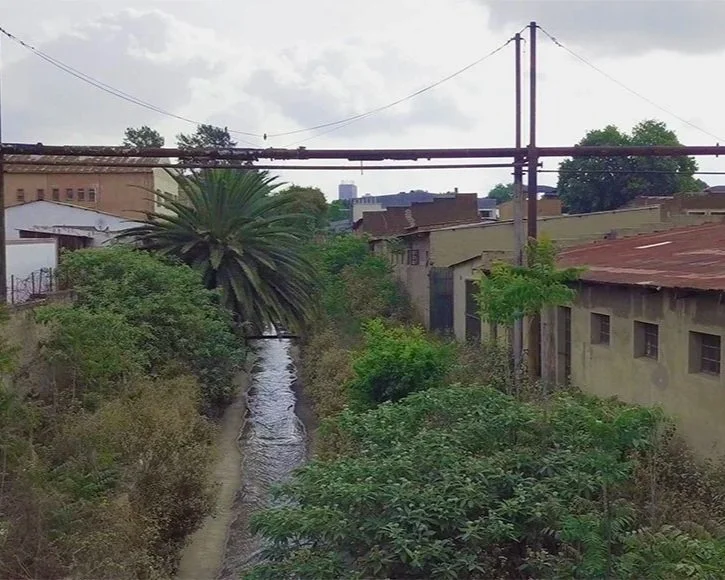
Long before our blessed SEF and SUNCASA awards arrived, WFTF had already laid the foundations it would go on to scale. Seeded in 2017 with R280,000 from Nando's and Victoria Yards, WFTF used its earliest funding to commission the baseline studies that established its credibility with the City of Johannesburg — work that fed directly into the Upper Jukskei Catchment Management Plan. Alongside this, WFTF began a scientific partnership with Dr Simon Lorentz of SRK Consulting, establishing a water monitoring station on the headwaters of the Jukskei and beginning years of continuous testing later carried on by Dr Kousar Hoorzook and her team at the University of Johannesburg's UJ-PEETS (University of Johannesburg Process, Energy & Environmental Technology Station) unit. This monitoring record — years in the making before any SUNCASA funding arrived — became the evidence base that later made new interventions possible.
That groundwork extended into direct employment. From December 2022 to May 2025, the Social Employment Fund (SEF) supported WFTF in employing 110 workers: 70 local community members for cleaning and nature-based-solution orientation, 30 Alexandra Water Warriors for debris management downstream, 5 Magaliesberg Rangers clearing invasive species in the Magaliesberg Biosphere, and 5 staff at the Gardens of Grace urban agriculture site.
The Groundwork
Scaling up with SUNCASA
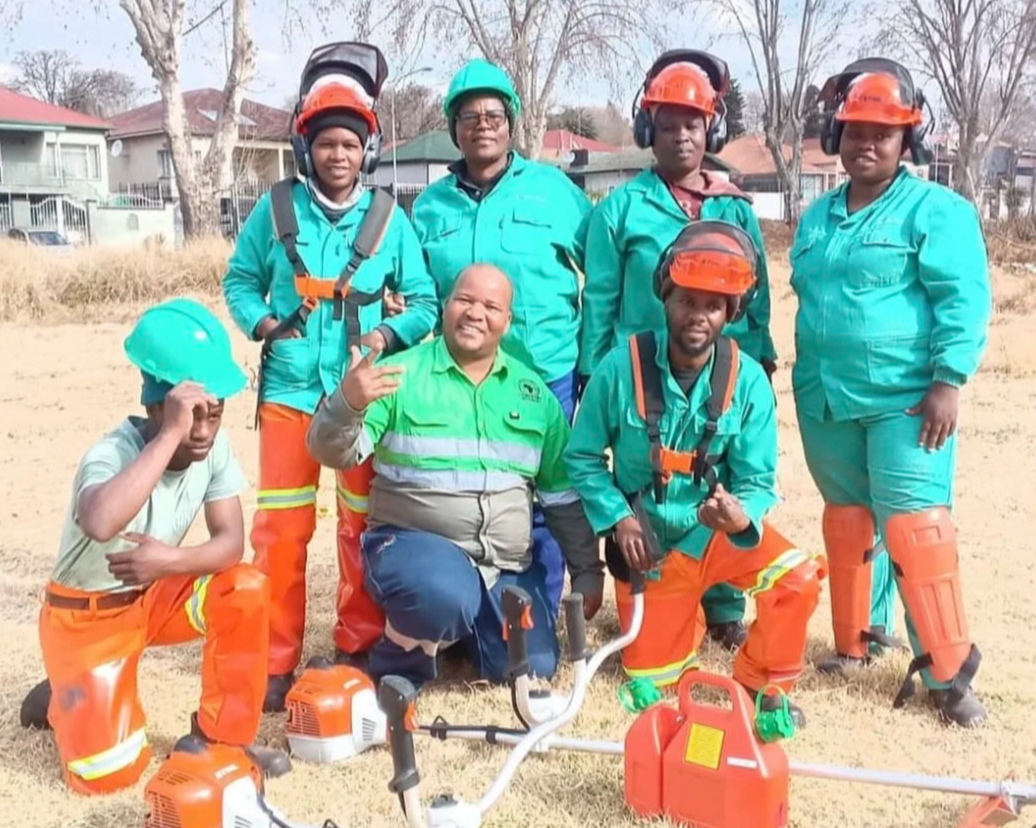
SUNCASA's role helped to fund and scale work WFTF had already set in motion. Since December 2022 — spanning the SEF-supported groundwork and the SUNCASA-funded period that followed — WFTF's teams have cleared 44.7 hectares of alien invasive vegetation and rehabilitated 14.7 hectares with near-extinct Soweto Highveld indigenous grassland, restoring habitat, reducing flood risk, and easing the urban heat island effect along the corridor.
To hold all of this together, WFTF also integrated Biosyntrix’s Wild2Earth app for the site-specific conditions of the project areas. The app is a field tool that maps restoration work against GIS and satellite data, mapping years of on-the-ground labour into verifiable, real-time evidence for municipal partners and transparent reporting purposes.
Within the SUNCASA-funded period specifically, seventy-one people, thirty-three of them women, were employed, completing sixteen accredited trainings spanning ecosystem management (chainsaw and brush-cutter certification, invasive plant identification, safe herbicide handling), soil and biodiversity science (agroecology & effective microorganisms), and operational safety and inclusion (Gender Equality and Social Inclusion workshops, First Aid, financial literacy). An independent Sustainable Asset Valuation modelled the return on scaling this kind of nature-based approach citywide, and found close to three dollars of benefit for every dollar invested and cumulative benefits approaching $5.6 million over a 25-year horizon — with WFTF's own restoration work in the Upper-Jukskei River Catchment one of the direct, on-the-ground contributors behind that modelling.
WFTF is now building on this foundation directly: a water-impact calculator will be a follow-on area of focus within WFTF’s digital monitoring and evaluation strategies, moving beyond citywide modelling to produce site-specific, verifiable water-quality data for the Jukskei corridor itself. In the meantime, WFTF made sure that training can extend into livelihoods beyond the programme itself, with participants learning green SMME skills like selling firewood, Bokashi-compost making, urban agriculture, and even beekeeping — turning a growing corridor into a small but real source of income.
The Eco-Filter: A Decade of Work, Made Visible
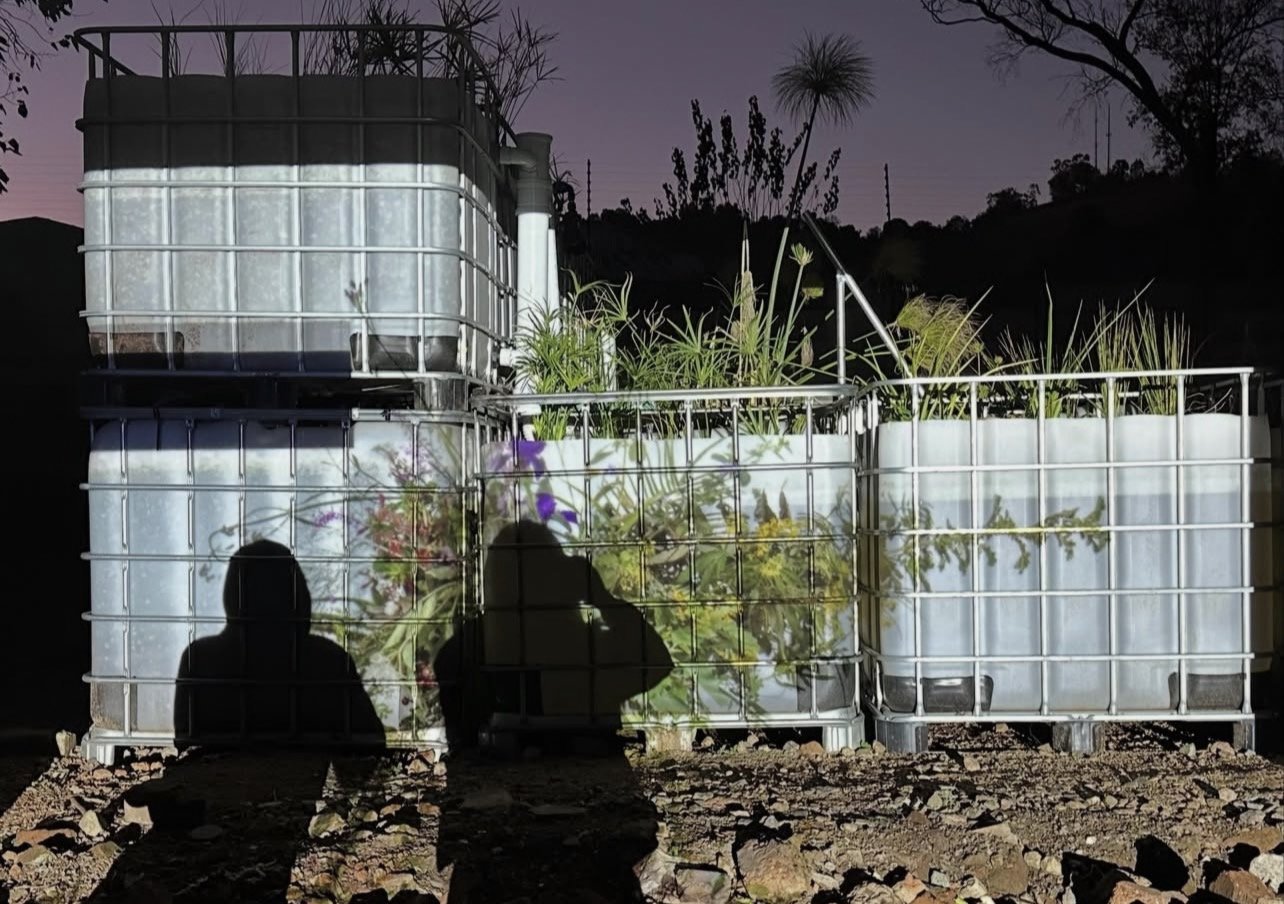
No single project demonstrates WFTF's long game better than the Eco-Filter. Since 2017, WFTF spearheaded the vision for a rehabilitated Jukskei, securing private land access and building the scientific partnerships — with Dr Simon Lorentz of SRK Consulting and UJ-PEETS — that ultimately made an engineered solution possible. The water monitoring station established in those early years, and the years of continuous testing that followed, created the evidence base that SUNCASA would later fund to scale.
Launched in April 2026, the Eco-Filter is a nature-based water treatment system built from modular 800-litre units arranged as ecological treatment cells, functioning like a constructed wetland to address microbial contamination, excess nutrients, and heavy metals in the Upper Jukskei. It was developed in collaboration with Isidima Design and Development, Zutari, and UJ-PEETS, and is now operated by trained WFTF staff. Beyond water treatment, it will help to irrigate the women-led community indigenous plant nursery at Gearhouse.
“The City of Johannesburg is committed to transitioning from reactive pollution management to innovative, sustainable solutions that restore the health of our urban rivers,” said Daniel Masemola, the City's Director of Water Management and Biodiversity, at the launch. “This initiative... demonstrates how environmental interventions can deliver meaningful socio-economic benefits.”
The World Comes to the Jukskei
As the work matured, so did outside recognition. In September 2025, WFTF co-hosted the Urban20 Technical Tour, welcoming 120 delegates from cities across the globe to walk the Upper Jukskei corridor and see nature-based restoration in action — erosion control built from site materials, indigenous grassland taking root, and community monitoring systems tracking water quality in real time. WFTF's team — Khethiwe Mzangwe, Sanele Ngcobo, and Muskaan Malik — translated years of restoration work into a single, compelling afternoon for an international audience.
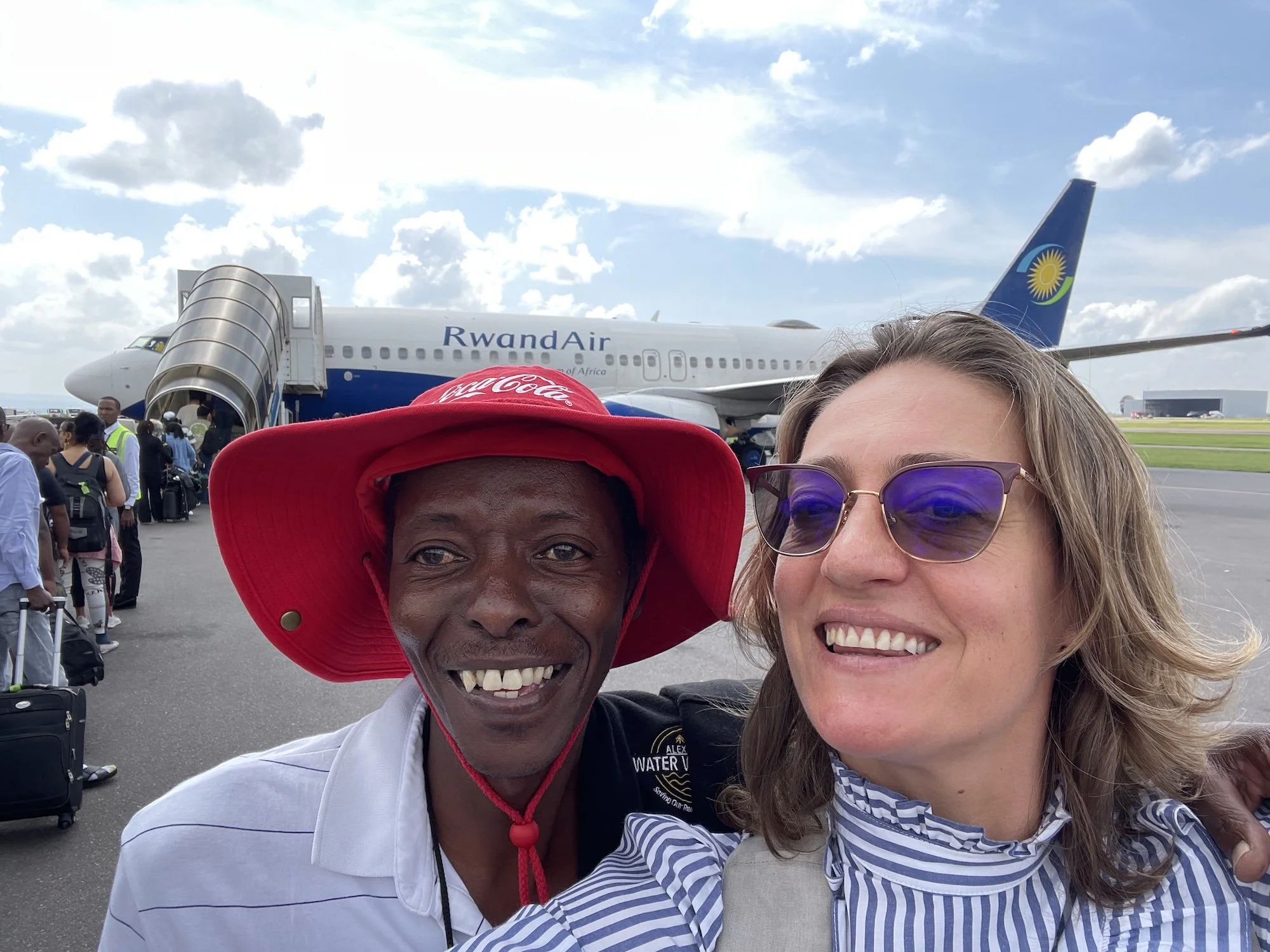
WFTF has also taken part in peer learning exchanges with implementing partners in Rwanda, Ethiopia and Alexandra, comparing notes on nature-based solutions, gender-responsive climate adaptation, and community-led restoration across African cities. Most recently, the City of Johannesburg's Environment and Infrastructure Services Department invited WFTF to host a site tour for affiliated Johannesburg community-based organizations — presenting the Upper Jukskei corridor as a best-practice, proof-of-concept example of what community-led, nature-based restoration can achieve over time.
What’s Next
SUNCASA's funding period has now concluded, but the work along the Jukskei continues. WFTF is pursuing a mix of income diversification, new grant partnerships, and revenue-generating enterprises — from indigenous beekeeping to a growing tool library — to keep this restoration model running well beyond any single funding cycle. Nine years in, the throughline remains the same as it was in 2017: a community, a river, and the patient work of proving that nature-based restoration is not a pilot, but a practice.