
The Eco Arts Corridor
A Living Gallery on the Jukskei River
Water For The Future's ambition is to change our experience of the Jukskei River at its root, and nowhere is this more visible than along what we call the Eco-Arts Corridor: a growing sequence of site-specific artworks, sculptures, murals and gathering spaces. Spearheaded by environmental artist Io Makandal and WFTF director Romy Stander; treating the river not as a hazard to be hidden, but as shared public heritage worth restoring in full view.
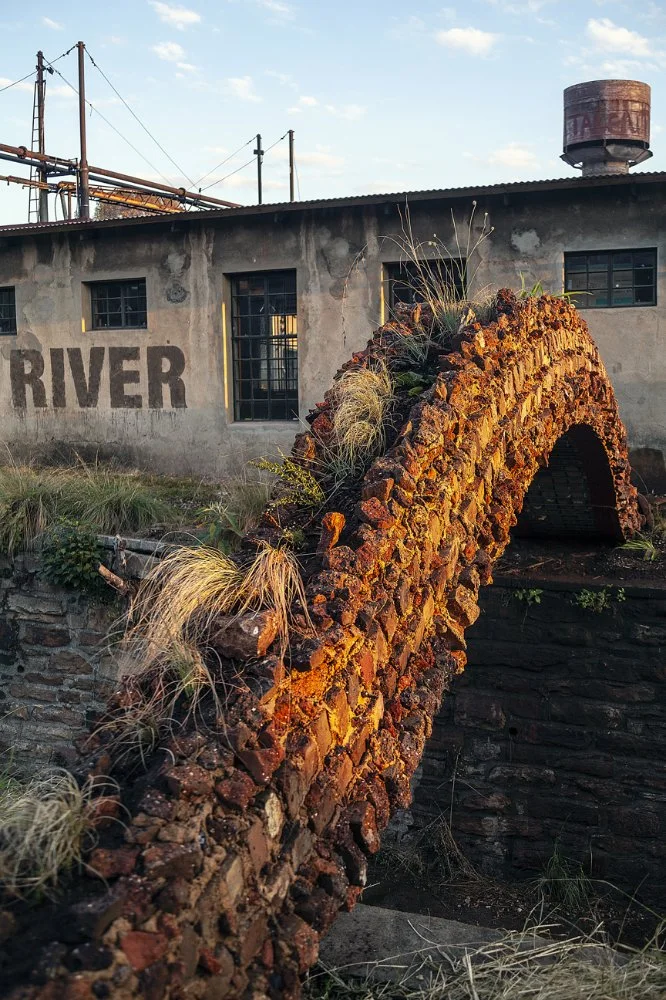
Image: Ophidians Promise (2024) by Io Makandal. Medium: salvaged bricks from demolished gold-mining era housing, planted with indigenous grasses . Photograph courtesy of Brett Rubin.
A Corridor Built Block by Block
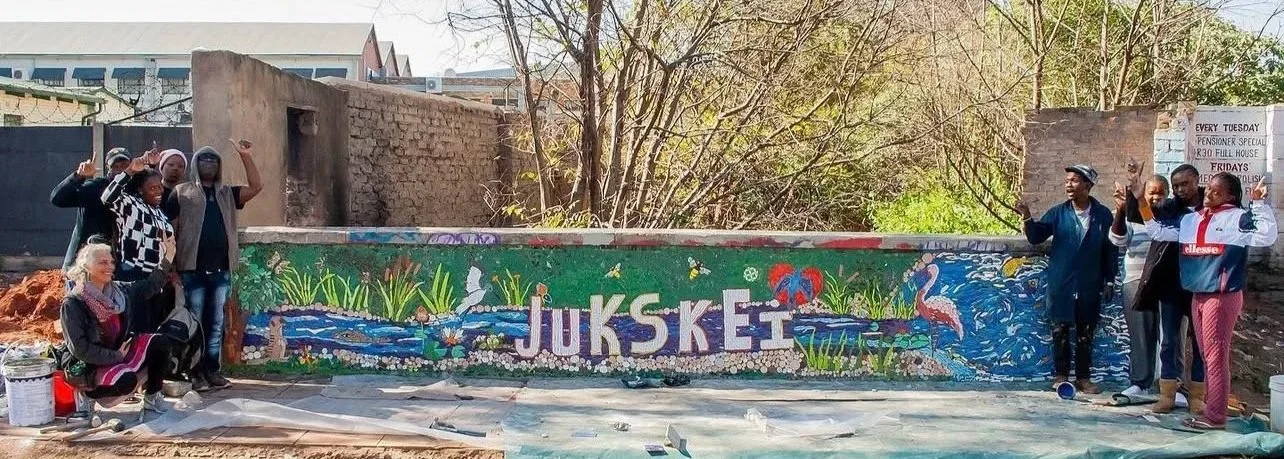
Image: photograph of WFTF and Spaza Art Gallery’s community-designed and produced mosaic, an urban beautification project located at the ‘daylight point’ of the Jukskei River in Lorentzville (2024)
The Eco Arts Corridor works as an open-air eco-museum, where installations merge with ecological restoration rather than sitting apart from it. It began outside Victoria Yards with the EcoTree Seat — a sculptural bench that paired design thinking with a Sustainable Urban Drainage System (SUDS) to help cool the area's urban heat island. That first gesture has since grown, through the combined work of WFTF's founding artists and directors, into a series of connected "urban blocks" — Daylight Point, Victoria Yards, and Gear House — where art and ecology merge into acts of remembrance and transformation along the river.
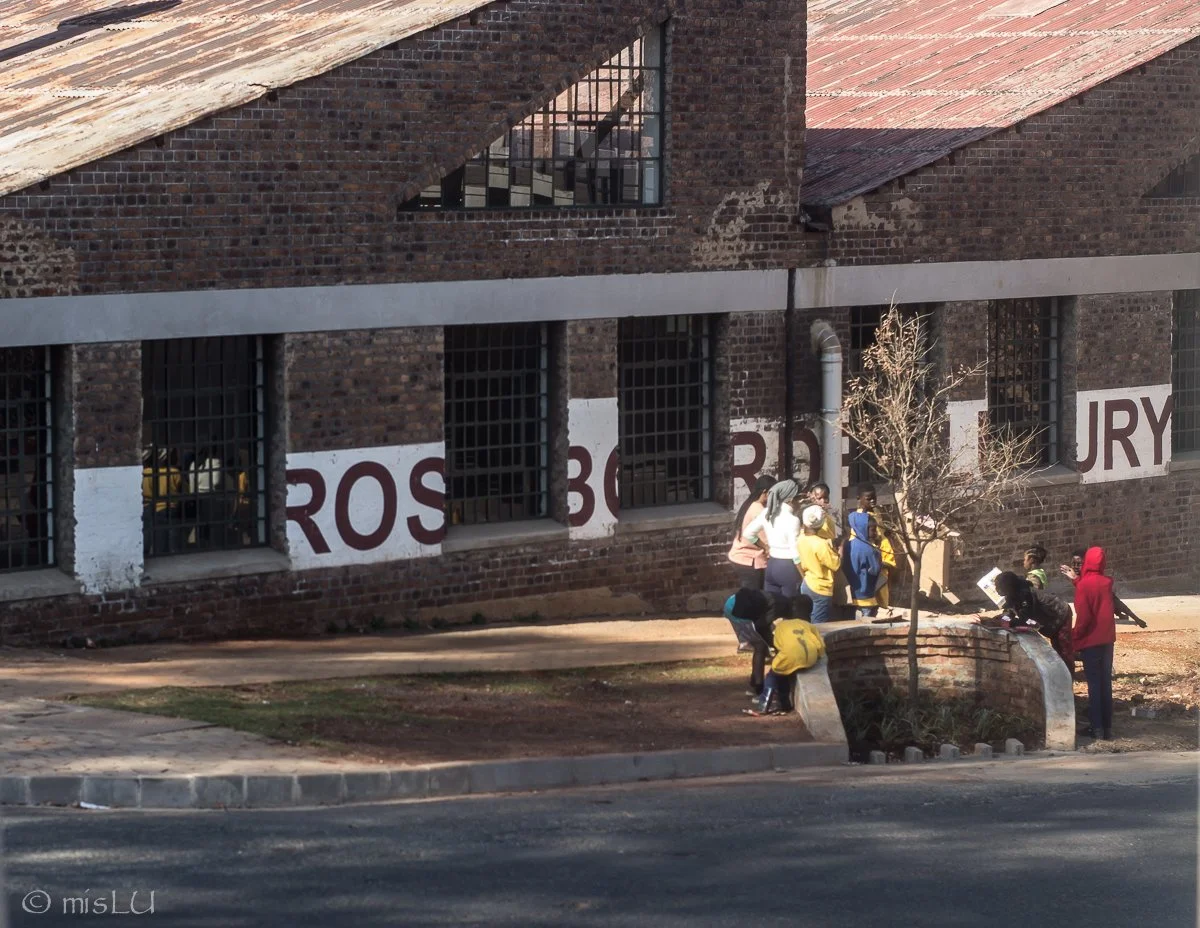
Image: Children congregate at the Eco-Tree Seat (2022). Designed by environmental artist Hannelie Coetzee (WFTF) for the Victoria Yards Arts and Culture Precinct, which abuts WFTF’s pilot site at the Jukskei River Canal. This sustainable urban drainage model draws floodwater from the paved streets into the natural filtration system of permeable earth and the underground water table. Photograph by Lungile Hlatswayo.
What has emerged is not the work of a single hand but a genuinely collective one: environmental artist and WFTF co-founder Hannelie Coetzee's early vision, interdisciplinary artist Io Makandal's ongoing body of installations, and WFTF Director Romy Stander's leadership in sustaining and scaling the corridor as an institutional priority have each been essential to getting it this far. The Eco Arts Corridor is, at its heart, a team effort — proof of what collective imagination can build along a river that had been written off as a hazard.
Signature Works Along the River
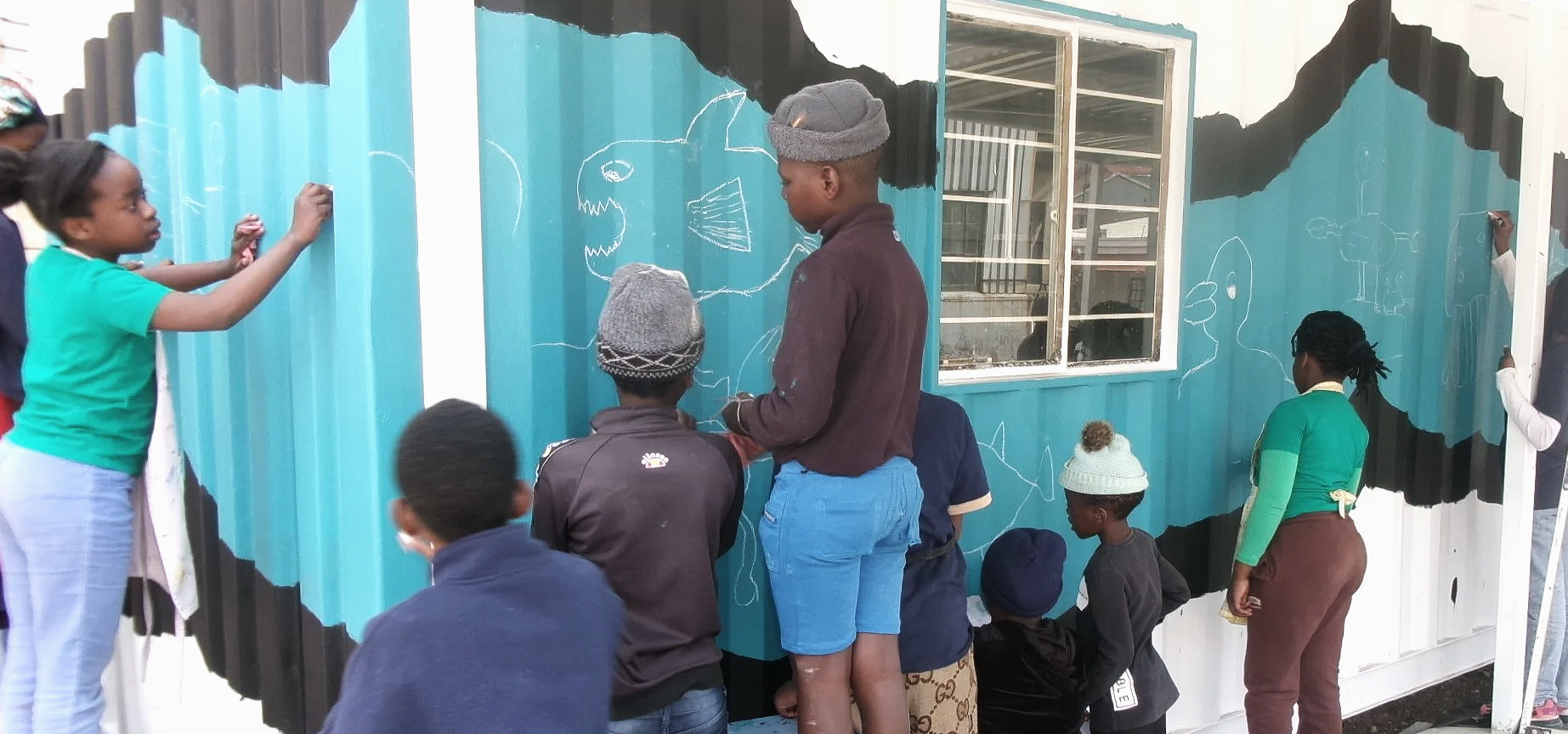
Image: Children paint the sides of the community container-library founded near the river.
A handful of realised projects now anchor the corridor. At Daylight Point — the exact spot where the Jukskei re-emerges into daylight after running underground through the city — a community-designed mosaic co-created with Spaza Art Gallery invited local children and neighbours to imagine the animals they hope will one day return to a rehabilitated river. It was built as a skills-development opportunity through the Social Employment Fund, leaving participants with transferable crafting experience long after the mosaic itself was finished. Along the culvert at Victoria Yards, Makandal's moss wall text Be The River (2025) asks passers-by to recognise the river as a living being with its own rhythms and its own claim to our care. The work was made with youth community members, teaching them about “green” graffiti using moss slurry. Murals produced with Flowers for Africa, and the Watershed Mural with Shade Youth & Arts Collective, have put paintbrushes directly into the hands of the community's children, turning the walls of a shared library and public spaces into a living record of the ecosystem WFTF is working to restore.
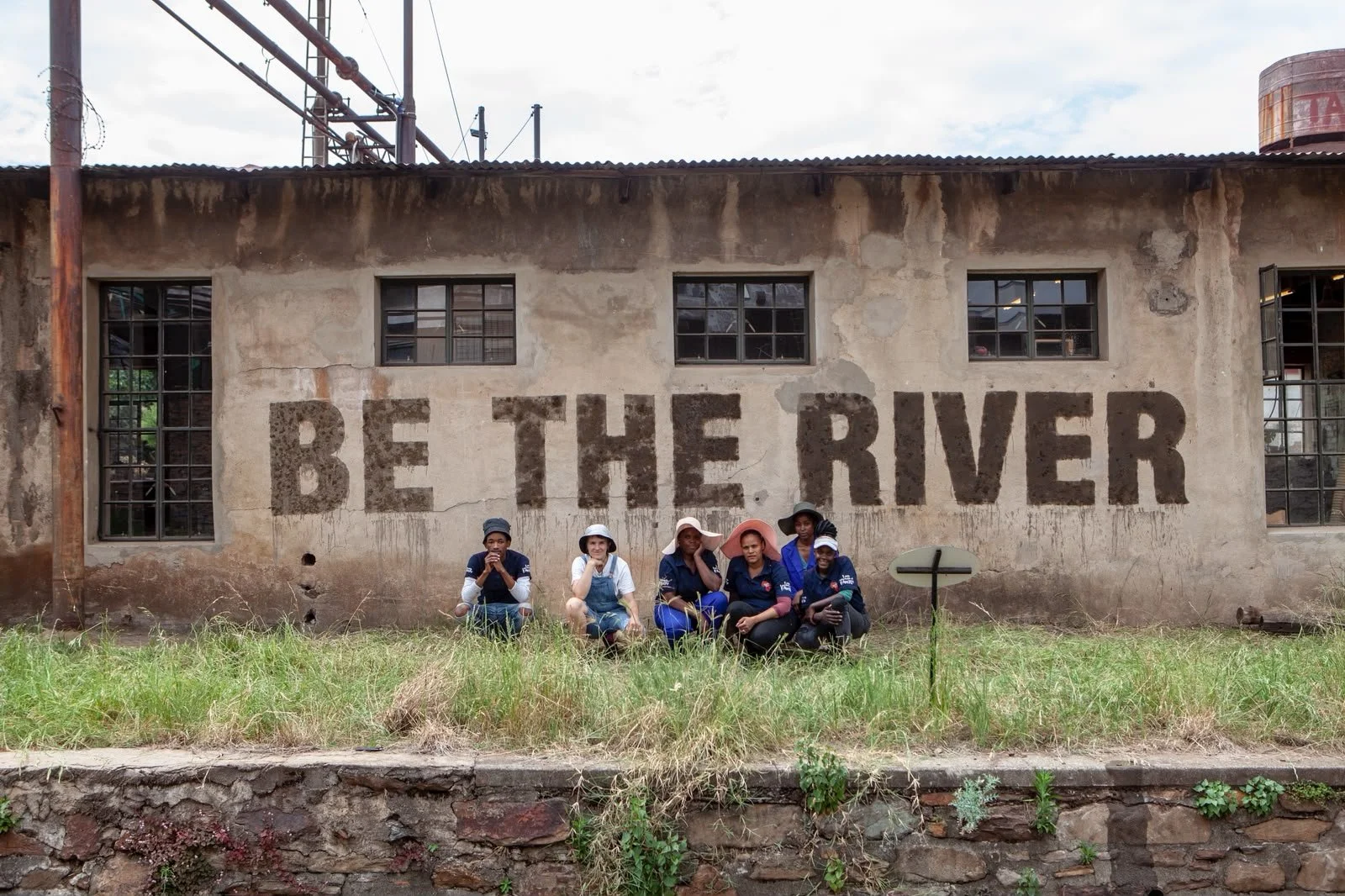
Image: Creative participants in front of Be the River (2025). Medium: moss slurry graffiti on studio wall. Photograph courtesy of Brett Rubin.
The Listening Garden (2022), created by Io Makandal and awarded by the Rupert Museum Social Impact Art Prize, is a living seed bank and sanctuary where steel sculptures and stone benches cultivate kinship between the river and the community. As future custodians of the river, children from Safe Study (a local free after-school care and educational centre) were invited to co-design the garden with Makandal .Nearby, Ophidian's Promise (2024) - Johannesburg's first eco-duct - is a serpentine public sculpture built from bricks produced from the very clay beds in Doornfontein where the Jukskei originally sprung, now salvaged from the demolished homes built during the early-1900s gold mining boom and planted with indigenous grasses to create a safe wildlife crossing over the river culvert. Eighteen months in the making, it has since featured in the film Burning Rebellion (2025), carrying the corridor's story into the climate movement's cultural imagination.
A Global Exchange of Rivers
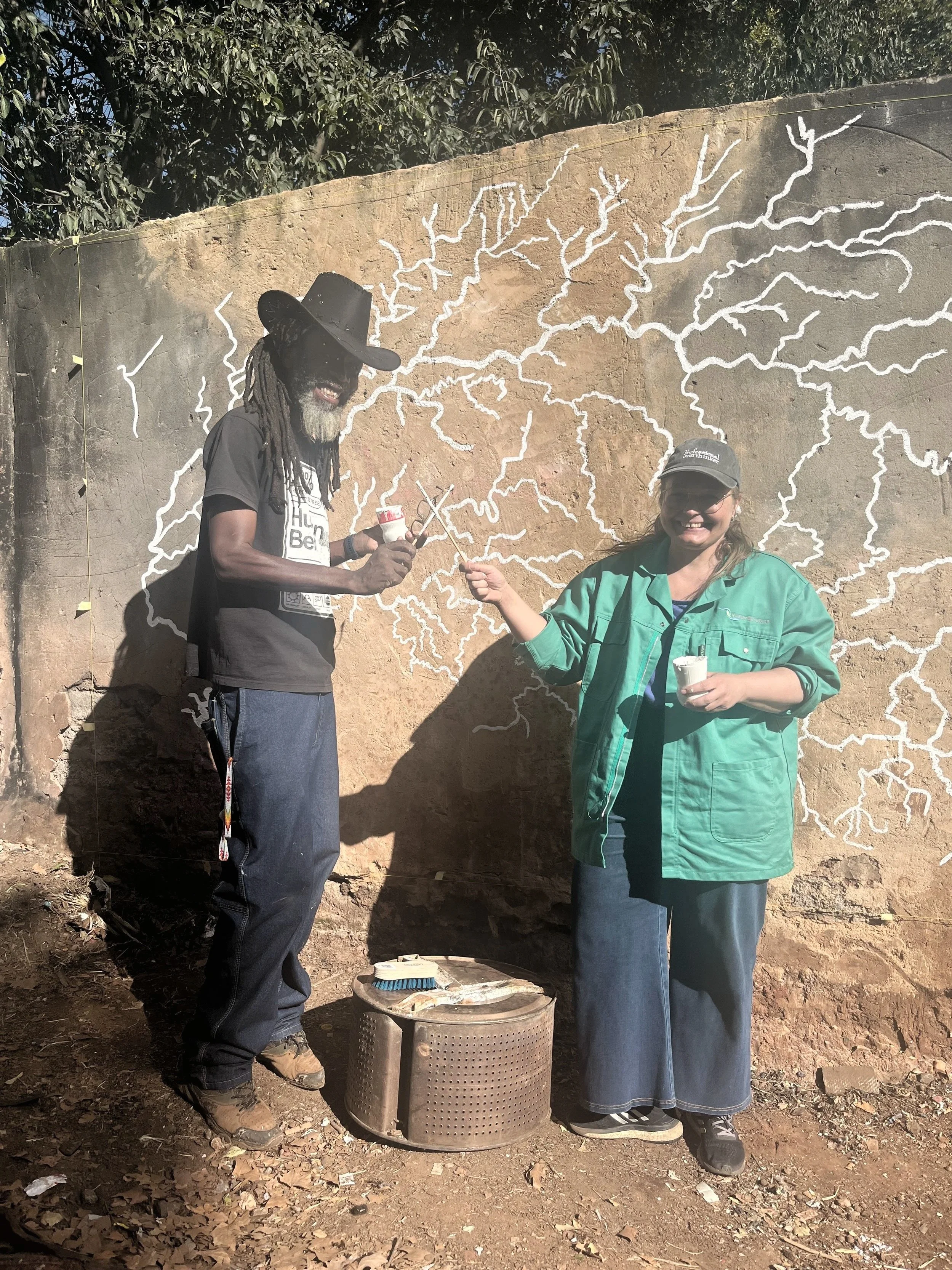
Image: Marlene Wagner with co-creator Sylvester Kumwenda, in front of U R Here (2026). Painting on degraded boundary wall, Queen Street.
The corridor's reach now extends well beyond Johannesburg. Cross Currents, an artist residency programme developed with the Austrian Cultural Forum Pretoria, has brought two waves of exchange between the Jukskei and the Danube since its launch in October 2025: architect and planner Marlene Wagner spent a month examining how spatial systems along the river reflect social and political conditions, while artist Anita Fuchs conducted a full botanical survey of the riverbank — cataloguing 116 plant species and 2 species of fungi into a single work, the Jukskei Bouquet (2026) — before travelling into the Magaliesberg mountains to find and cast a stromatolite fossil linking the river's present to some of the oldest evidence of life on Earth. In April 2026, WFTF was also invited into the international Soil & Water Finissage at NIROX Sculpture Park and the University of Pretoria, where Makandal's soil artwork If the Earth Had Eyes (2026) represented the Upper Jukskei Catchment soil analysis alongside alongside artists and researchers from across the globe.
That international profile continues to grow: Thuli Mlambo-James — a programme manager for the Eco Art Corridor strategy team in 2025— was named one of 39 global recipients of the CIMAM Travel Grant, supported by the Getty Foundation, representing WFTF at the CIMAM Annual Conference in Turin, Italy. The corridor has also formed part of A Feral Commons, a transcontinental Global Co-Commission spanning Alserkal Avenue in Dubai, Victoria Yards in Johannesburg, and Kingston Creative in Jamaica, which positioned the Jukskei as a living example of urban ecological restoration in conversation with post-colonial cities around the world.
Art as Activism
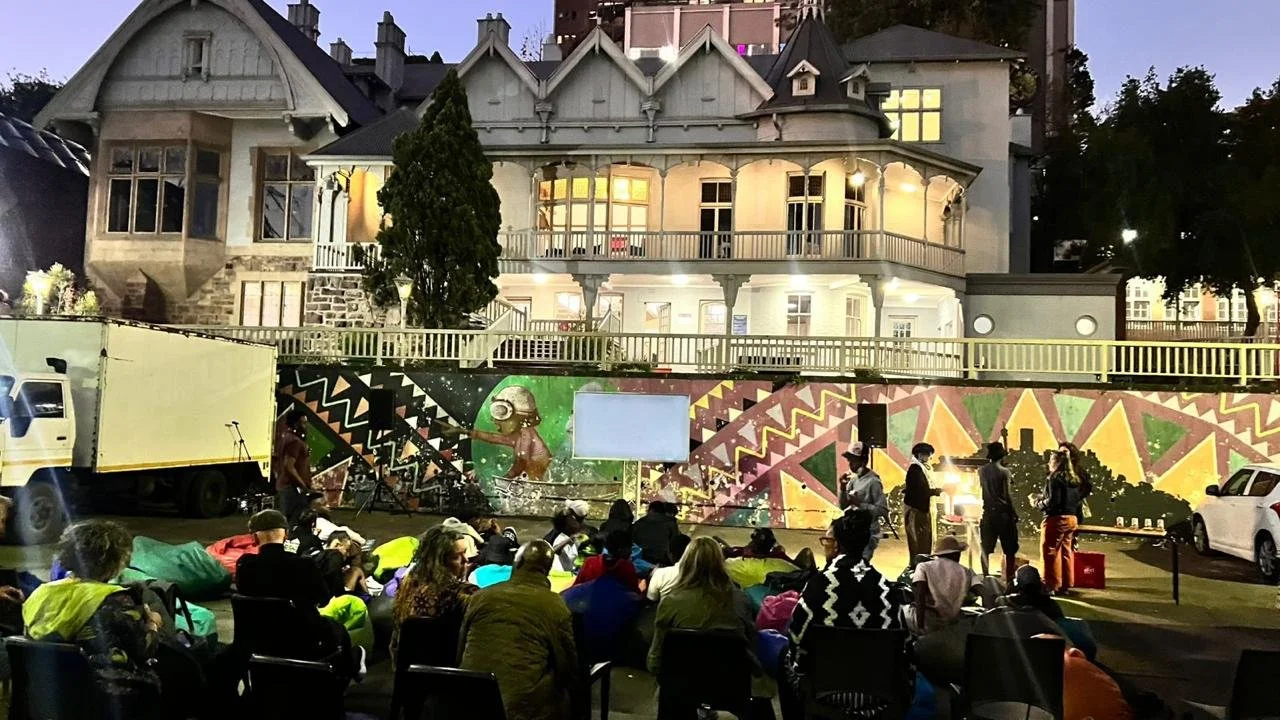
Image: Staging Climate Justice workshop and screening at Windybrow Arts Centre, 2025
The corridor is not only a place to visit — it is also a space for confronting the climate crisis directly. In September 2025, WFTF joined the Well Worn Theatre Company at the Windybrow Arts Centre for the Staging Climate Justice workshop, exploring how performance can move audiences from spectators to participants in the climate struggle. The evening closed with the premiere of Burning Rebellion (2025), a film by Kyla Davis weaving performance, poetry and community voices around the question of what we are willing to fight for — with images of Ophidian's Promise featuring as part of its visual landscape.
Community celebration plays an equally important role: WFTF brings murals, music and storytelling together with practical workshops on turning waste into income, reflecting WFTF's belief that environmental action and community joy are part of the same movement.
What Comes Next
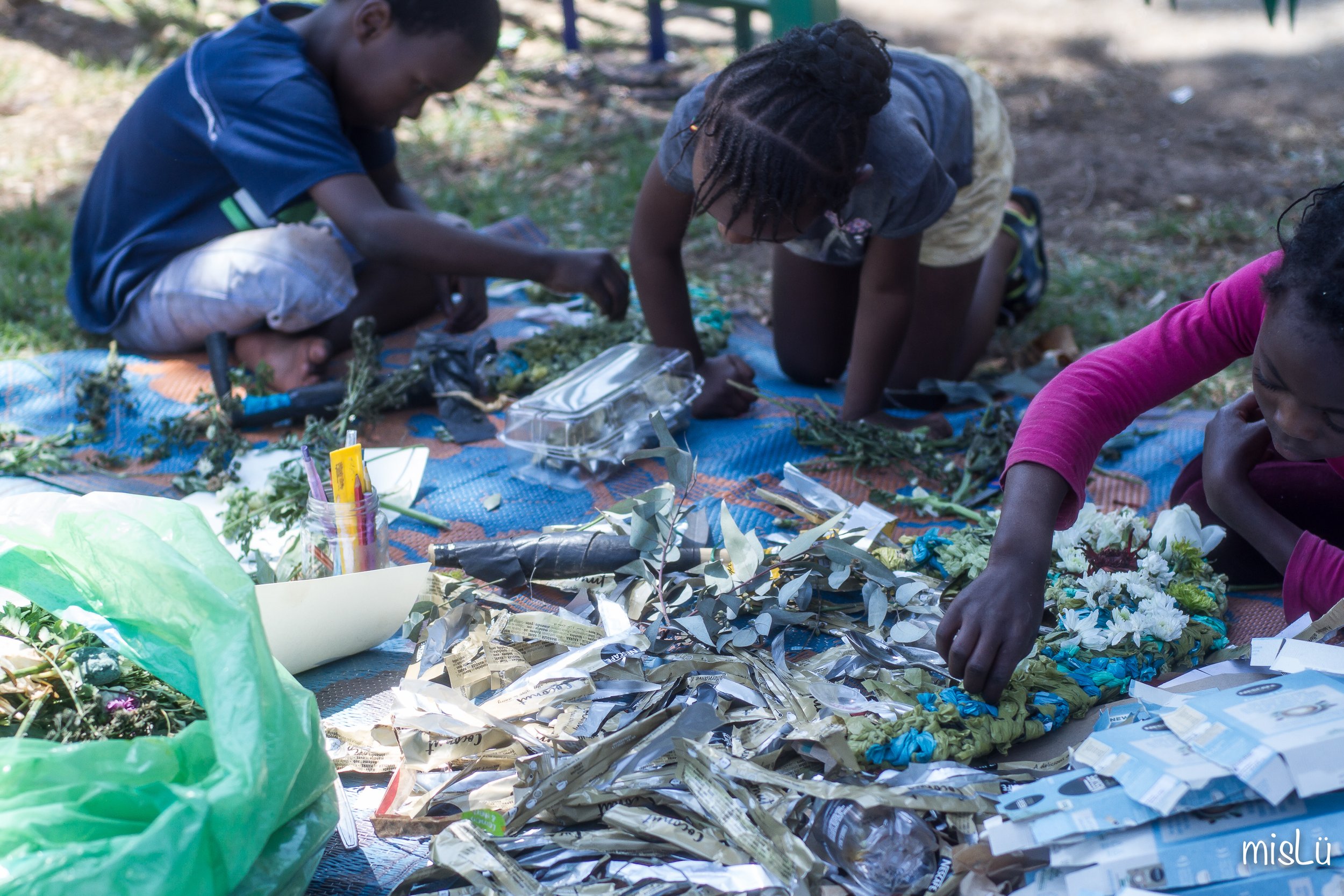
Image: Community children’s art project on the Jukskei River, 2022. Photograph by Lungile Hlatswayo
As the corridor grows, new work is already in development: sculptures by internationally acclaimed Zimbabwean sculptor Ben Tuge are in discussion, and a fresh round of call for new participating artists are being prepared for 2027. Our efforts continue the corridor's founding idea — that ecological repair and cultural expression are inseparable.
WFTF's ambition for the Eco Arts Corridor is to build a genuinely sustainable model of eco-cultural tourism for Johannesburg: one where every installation is backed by a dedicated funding stream, transparent reporting, and measurable impact, and where visitors are invited into deep engagement with the "more than human" world of the river rather than a passing glance at public art. As WFTF continues to scale this model, the Eco-Arts Corridor remains what it has always been — a pulse of healing and possibility for the community that lives alongside the Jukskei. We invite you to experience it for yourself.