
Knowledge & Policy
WFTF's Book, Global Conferences, and Policy Influence, 2022–2026
If the first proof of Water For The Future's work is what has been rebuilt along the riverbank, the second is what has been written, presented and argued for in rooms far from the Jukskei itself. Since 2022, restoring this five-kilometre stretch of river has produced not only hectares of grassland and a working water-treatment system, but a published book, a stream of invitations to international conferences, and a growing role in shaping the policy conversations that decide how cities respond to climate change.
From Symposium to Book

The throughline began in September 2022, when WFTF co-hosted the Riparian Urbanism Symposium at Gearhouse with the South African Research Chair in Science Communication at Stellenbosch University — two days that brought scientists, artists, storytellers, activists and community voices together to talk about the Jukskei from every angle. Out of those conversations came the idea for a book that could hold all of it: not just water-quality data or flood statistics, but the lived experience of a river that had been degraded, ignored, and is now being restored.
That book, Johannesburg from the Riverbanks: Navigating the Jukskei, launched over three days in mid-2025 across three very different rooms: Exclusive Books in Rosebank, the Community Library at Victoria Yards, and a celebration hosted with the Alexandra Water Warriors — the community most affected by the river's degradation and most committed to its restoration. The launches continued to Stellenbosch and the V&A Waterfront in Cape Town, carrying the Jukskei's story to audiences facing their own urban water crises. WFTF contributed original chapters to the book: community perspectives, ground-level observations of environmental change, and insight drawn from years of hands-on restoration work — the kind of material that rarely comes from the organisation doing the restoring, rather than one studying it from outside.
Influencing Policy
On 12 March 2026, the City of Johannesburg's Environment and Infrastructure Services Department signed a Letter of Endorsement confirming WFTF's role within the City's Climate Action Plan and its increased integration of green-blue infrastructure. As an official implementing partner of SUNCASA, WFTF’s work contributed towards the City's Transformative Riverine Management Programme (TRMP), a multi-departmental river-governance framework that brings municipal departments together under a shared river mandate. For a community organisation, this is more than recognition on paper: it opens a formal pathway to mainstream community-led restoration into core city functions, and to access the kind of sustainable, institutional funding that no single grant cycle can provide.
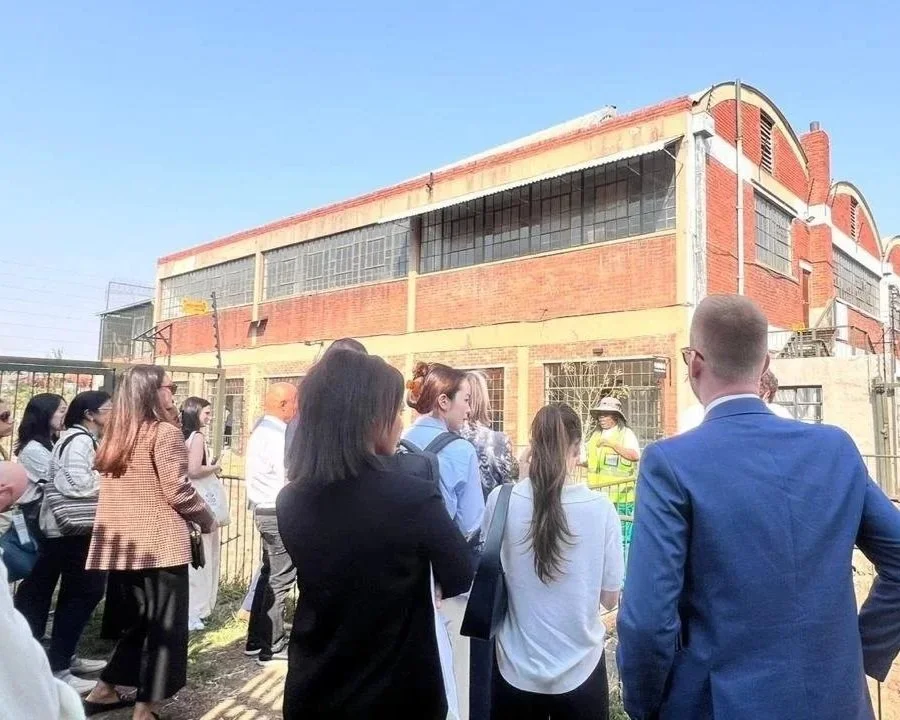
That same recognition has played out on international stages too. At the Globelics International Conference in Pretoria in November 2025, WFTF Director and Co-Founder Romy Stander joined a panel on Engaged Policy Experimentation alongside representatives from the University of Johannesburg, the Gauteng Department of Environment, and the Department of Trade, Industry and Competition — exploring how policy should be tested and adapted through real-world feedback rather than handed down and left unchanged. Two days later, WFTF took part in the launch of the Canada-Africa Partnership on Intellectual Property for Climate Action, a seven-year initiative led by the University of Ottawa, the University of Cape Town, and South Africa's Department of Science and Innovation — grappling with how climate solutions and indigenous knowledge are protected, shared and credited.
Being in these rooms — and named within these frameworks — matters because community organisations doing hands-on restoration work are so often absent from both. When WFTF is invited to contribute, or written into a municipal governance programme, it signals that practice-based knowledge, built through years on the riverbank rather than in a lab, belongs in the conversation about how policy gets made — and, increasingly, in the machinery that decides how it gets funded and sustained.
A Global Conference Circuit
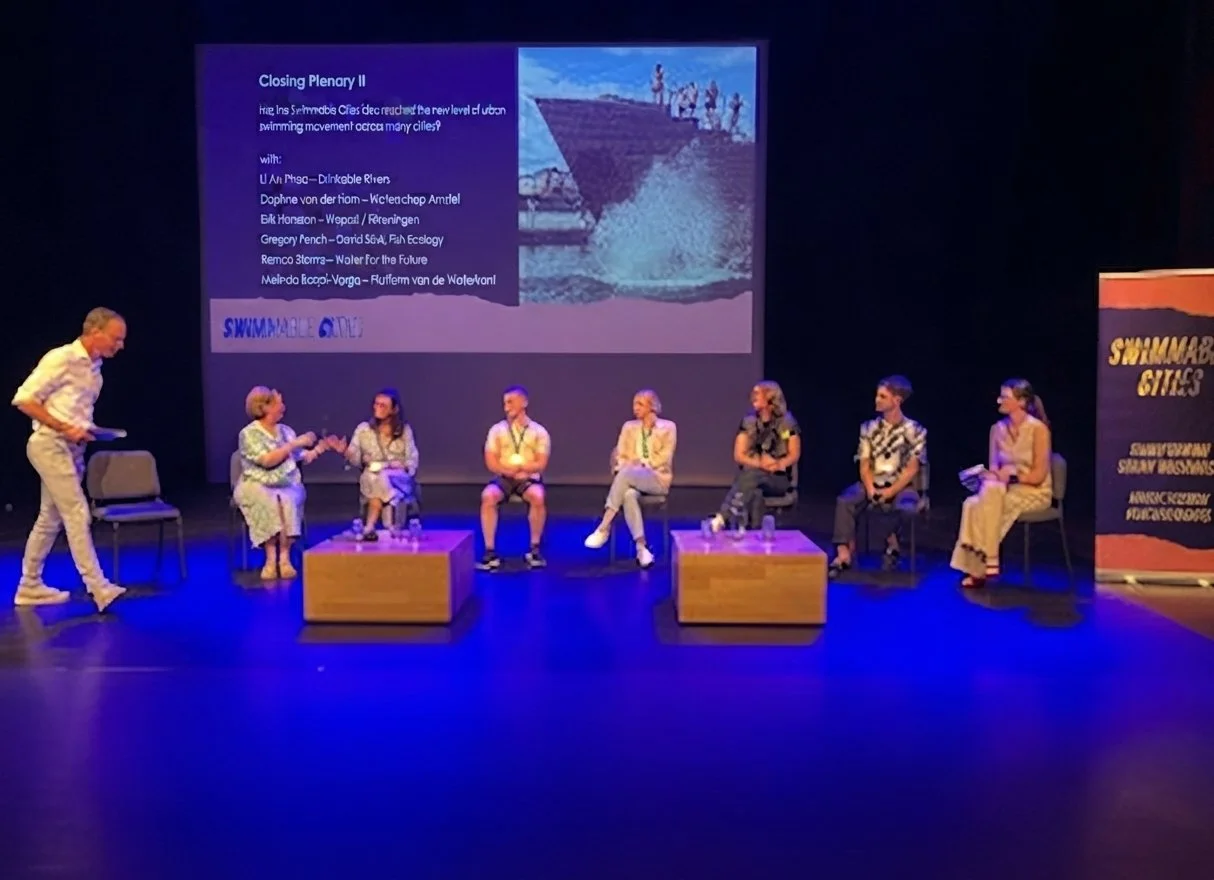
In 2025 alone, WFTF's model of community-led, nature-based restoration was presented on at least four continents. At I.S.Rivers in Lyon, France — a conference held only once every three years — WFTF presented a poster on our holistic approach to integrating social and economic issues with nature-based solutions, situating the Jukskei's restoration within a global discourse on river systems. In Rotterdam, WFTF joined the closing panel of the inaugural Swimmable Cities Conference, alongside city leaders from Rotterdam, New York, Paris and Melbourne, discussing what it takes to make degraded urban waterways clean and accessible again. In Guimarães, Portugal, WFTF took part in the 2nd International Conference on the Future Design of Streets, connecting the Jukskei's catchment-level work to a wider conversation about how urban streets can be redesigned for climate resilience.
Closer to home, WFTF's own Dr Jessica Webster and ecological specialist Tam Scheidegger had a co-authored abstract accepted into the 2nd African Forum on Urban Forests, hosted in Johannesburg — presenting WFTF's grassland and pocket-forest work as a challenge to urban forestry models that overlook grasslands in favour of trees. It was a reminder that this pillar of WFTF's work isn't only about being invited into other people's conversations; it's also about originating research from the ground up.
Recognition Beyond the Conference Circuit
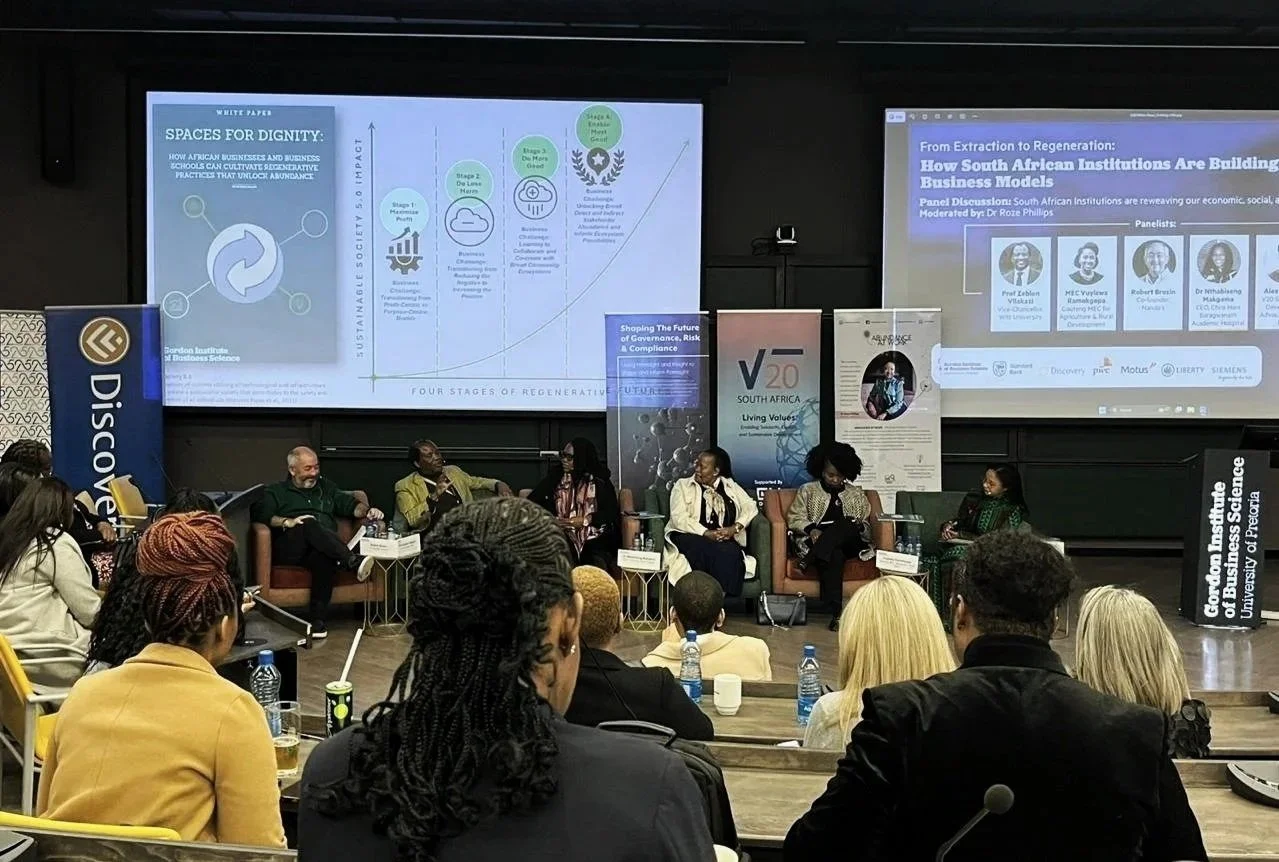
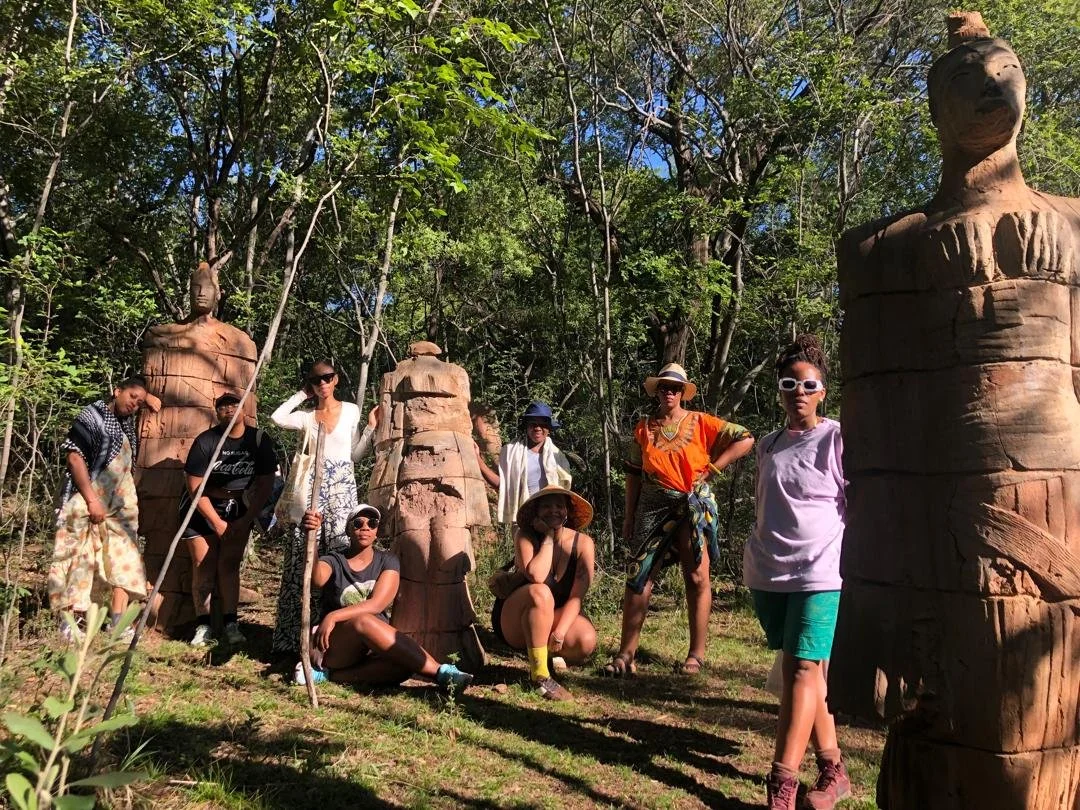
WFTF's inclusion in the Spaces for Dignity white paper (2024) — alongside Nando's South Africa and Victoria Yards — positioned its restoration work as a live example of regenerative infrastructure in an African context, rather than a theoretical case study. And each year since 2024, the Eco-Feminist Creative Research Retreat, hosted with the Centre for Science Communication at Stellenbosch University and the NRF-SARChI Science Communication Chair, has brought researchers, artists and practitioners together in the Magaliesberg to think through ecological work from a different register entirely: poetry, storytelling, and indigenous medicinal knowledge alongside the more familiar language of restoration.
A published book and a conference circuit spanning Lyon, Rotterdam, Guimarães and Pretoria are the result of treating restoration work as something worth documenting, researching and arguing for — not just doing. Taken together, they make the case that African cities are not passive recipients of imported environmental solutions, but active sites of ecological knowledge in their own right. WFTF's work on the Jukskei continues to test that idea, one paper, one panel, and one chapter at a time.